

Roadside Assistance vs Towing Services in South Milwaukee
Table of Contents
Roadside Assistance vs Towing Services: The Core Difference
Side-by-Side Comparison: Scope, Cost, and Response
When to Call a Tow Truck Instead of Roadside Help
Car Battery Jump Start South Milwaukee: What to Expect
Flat Tire Roadside Assistance South Milwaukee Drivers Can Count On
Why 24/7 Towing South Milwaukee Coverage Matters After Dark
What to Tell the Dispatcher When You Call
Frequently Asked Questions
Last Updated: October 17, 2026
Roadside Assistance vs Towing Services: The Core Difference
Roadside assistance is on-site help that gets your vehicle running again, while towing is the physical transport of a vehicle that cannot be driven. That is the whole distinction, and it decides which call you make. Roadside assistance vs towing services in South Milwaukee comes down to one question: can your car move under its own power in the next few minutes? If yes, you need a jump start, a tire change, or a lockout tech. If no, you need a flatbed.
Boost Towing & Recovery LLC handles both sides of that line across southeastern Wisconsin and the central midwest, so we see the confusion up close. Drivers often call for a tow when a jump start would have solved it in ten minutes. Others wait on a battery service when a dead alternator means the car will not restart anyway.
Here is the practical split:
Roadside assistance: battery jump starts, flat tire changes, lockouts, fuel delivery, winch-outs
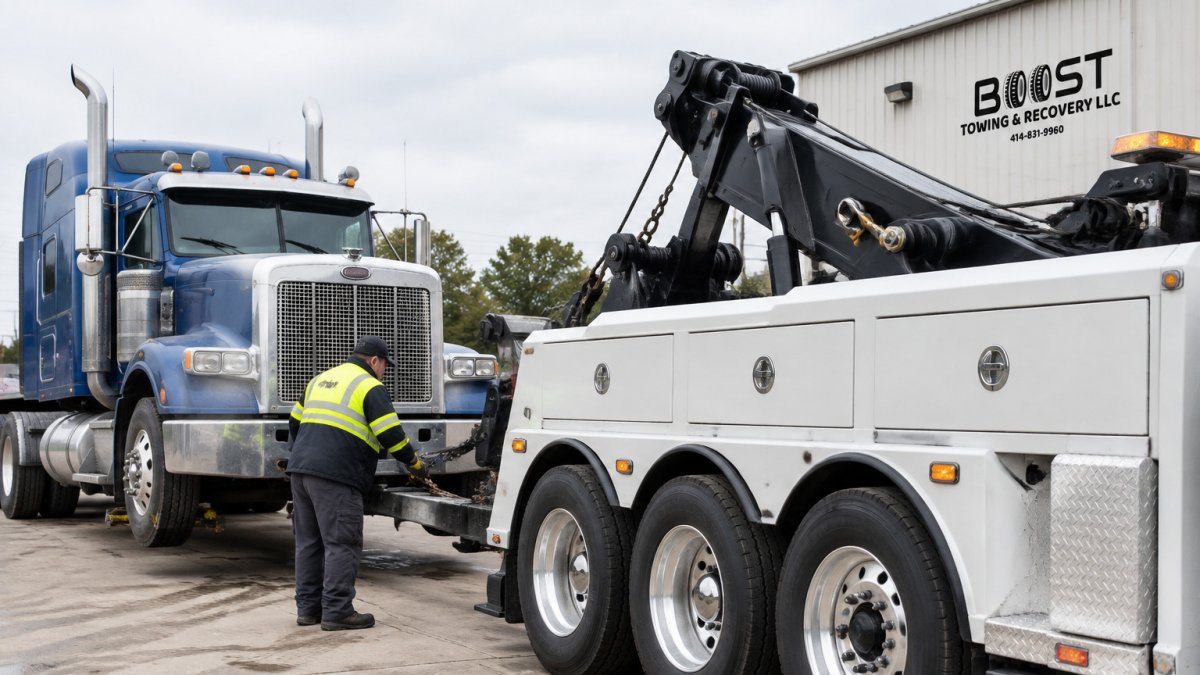
Towing: transport to a shop, a home, or a storage lot when the vehicle cannot be driven safely
Recovery: extraction from a ditch, mud, or snowbank before any transport happens
Most breakdowns fall into the first bucket. Most panicked phone calls do not.
Side-by-Side Comparison: Scope, Cost, and Response
The two services differ in what happens on scene, who does the work, and how the bill is built. Roadside work is usually a single service call. Towing is priced by distance and equipment, which is why quotes vary so much.
Factor | Towing Service | |
What happens | Fix on site, you drive away | Vehicle loaded and moved |
Typical triggers | Dead battery, flat tire, lockout, empty tank | Crash damage, failed engine, unsafe to drive |
Pricing basis | Per service call | Distance plus equipment type |
Equipment | Jump pack, jack, lockout tools, fuel can | Flatbed or wheel lift, winch |
Where it ends | You drive off | Vehicle at a shop or destination |
Best for | Simple, reversible problems | Mechanical failure or collision |
Cost is where drivers get burned. A roadside call is generally the cheaper path because there is no mileage component. A tow adds distance to the bill, and the equipment matters: flatbed transport for an all-wheel-drive or specialty vehicle costs more than a wheel-lift hookup for a compact sedan.
Ask for the total before anyone dispatches. A reputable operator can give you a firm number once they know your location, your destination, and your vehicle type. If a dispatcher cannot answer that, that is your signal.
When to Call a Tow Truck Instead of Roadside Help
Call a tow truck when the vehicle cannot be driven safely, legally, or reliably, even after a roadside fix. A jump start on a car with a failed alternator just delays the same breakdown by twenty minutes. A tire change on a bent rim gets you nowhere.
The National Highway Traffic Safety Administration guidance on vehicle breakdowns is blunt about this: a disabled vehicle on a live lane is a hazard, and getting it off the roadway is the priority. That means a tow, not a tire change in traffic.
Situations that need transport, not a fix:
The engine overheats or will not start after a jump
Collision damage, even minor, that affects steering or lights
A blowout that damaged the wheel or suspension
The vehicle is in a ditch, on a median, or blocking a lane
You are unsure whether it is safe to drive
A common mistake is trying to save the tow fee and driving a damaged car to the shop. The repair bill after that drive is always larger than the tow.
Watch Out If your car is stopped in a live traffic lane, do not stand behind it or attempt a tire change. Move behind the barrier if you can, call for a tow, and let a professional get the vehicle off the road.
Car Battery Jump Start South Milwaukee: What to Expect
A car battery jump start in South Milwaukee is a single roadside visit where a technician brings a portable jump pack, boosts the battery, and tests whether it holds a charge. You drive away if it does. You get a tow to a repair shop if it does not.
The process is quick. The technician connects the pack, starts the vehicle, and watches the voltage. A battery that recovers and holds is fine for now. One that dies again within minutes points to a failing battery or a bad alternator, and no amount of jumping will fix that.
Cold Wisconsin mornings are hard on batteries. A battery that cranked slowly all fall often quits on the first hard freeze. If yours is more than a few years old and has been sluggish, get it tested before the season turns.
Pro Tip After a jump start, drive at highway speed for at least twenty minutes rather than idling in your driveway. Idling barely recharges a battery, and a short hop to the corner store often leaves you stranded again the next morning.
Flat Tire Roadside Assistance South Milwaukee Drivers Can Count On
Flat tire roadside assistance in South Milwaukee means a technician changes your tire on scene using your spare, provided the spare is inflated and the wheel is undamaged. No spare, or a damaged rim, and the call becomes a tow.

Two things decide whether a flat is a roadside job or a tow. First, do you have a usable spare? Many newer cars ship with a repair kit instead of a full spare, and a kit will not fix a sidewall tear. Second, is the wheel itself damaged? A bent rim will not hold air no matter how good the tire is.
Check your spare pressure twice a year. A flat spare turns a ten-minute fix into a tow, and that is a frustrating way to spend an afternoon.
Why 24/7 Towing South Milwaukee Coverage Matters After Dark
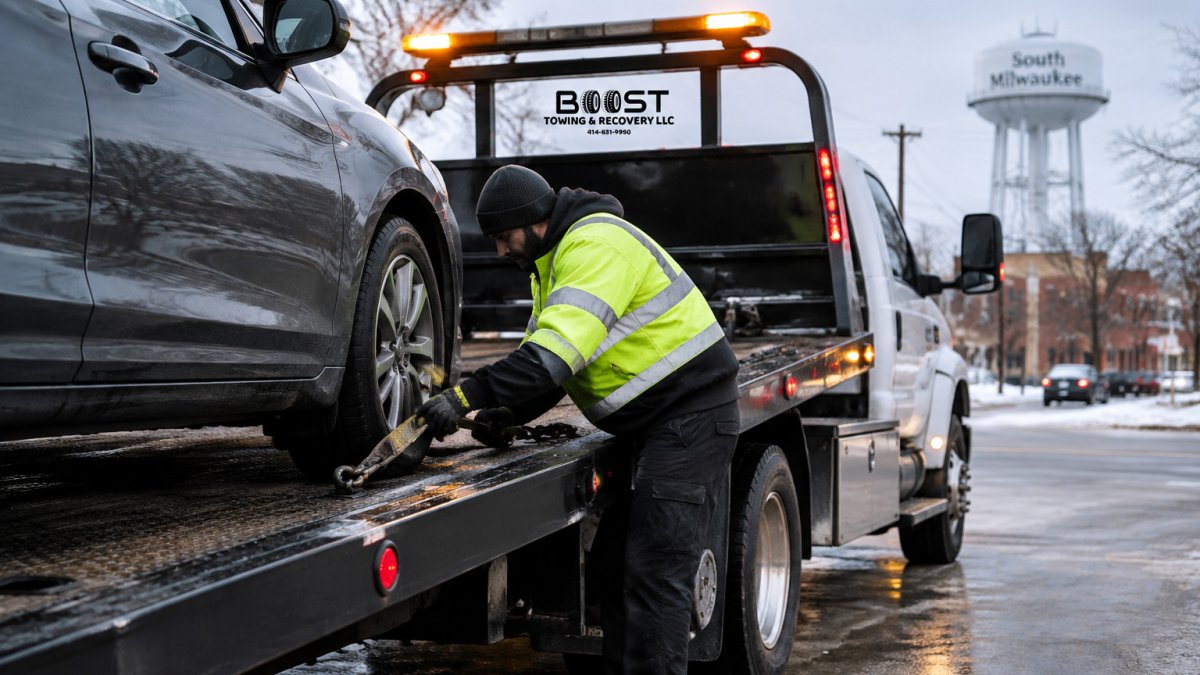
Breakdowns do not keep business hours. 24/7 towing coverage in South Milwaukee matters because most stranded-driver calls come at night, in bad weather, or on a weekend when repair shops are closed. A company that answers at 2 a.m. is the difference between a two-hour wait and a five-minute plan.
Night calls carry real risk. Visibility drops, traffic moves faster than drivers expect, and a car on the shoulder is hard to see. Getting the vehicle and the people off the road quickly is the whole job.
The Wisconsin Department of Transportation traveler information is worth bookmarking before a winter storm, and so is a towing number you trust. We staff overnight dispatch for exactly this reason: a driver on I-94 at midnight needs a real answer, not a voicemail.
What to Tell the Dispatcher When You Call
Give the dispatcher four things and the call goes fast: your exact location, your vehicle's make and model, what went wrong, and whether you are in a safe spot. That is it. Everything else follows.
Location is the hard part. "On the highway" is not a location. Use the nearest exit number, a mile marker, a cross street, or a business name you can see. On a phone, share your GPS pin if you can.
Then describe the problem plainly. "It will not start and the lights are dim" points to a battery. "The tire is shredded and the rim is bent" points to a tow. The dispatcher uses that to send the right truck with the right equipment on the first trip.
Key Takeaway The single most useful thing you can do before a breakdown is save a towing number you trust and know your own location. Everything else the dispatcher can work out with you.
Expect to be asked whether the vehicle is in a driveway, a lot, or a live lane, and whether it is all-wheel drive or modified. Specialty and exotic vehicles need flatbed transport, and a company that asks first is a company that will not damage your car.
Frequently Asked Questions
What is the difference between roadside assistance and towing?
Roadside assistance handles problems that can be fixed where you are parked: a dead battery, a flat tire, a lockout, or an empty gas tank. Towing moves the vehicle when it cannot be driven safely or the repair has to happen at a shop. In South Milwaukee, many calls start as roadside assistance and turn into a tow once the driver or technician finds damage that on-site work cannot fix.
When should I call for roadside assistance instead of a tow?
Call roadside assistance first when the car starts but will not stay running, when a tire is flat but the wheel and suspension look fine, when the keys are locked inside, or when you run out of gas. Call for a tow when the engine will not turn over after a jump start, a tire is shredded, the car has been in a collision, or you see fluid leaking under the vehicle. Knowing when to call a tow truck saves you from paying for a service that will not solve the problem.
Can roadside assistance tow my car in South Milwaukee?
Some providers bundle both, and a flatbed or wheel-lift truck can be dispatched when on-site work fails. Ask the dispatcher directly whether the company you call handles towing as well as jump starts and tire changes, so you are not handed off to a second provider. A company with its own trucks can move your vehicle to a repair shop the same night instead of leaving it on the shoulder.
Does roadside assistance cover a dead battery or flat tire?
Yes, these are the two most common roadside calls. A jump start gets you moving again if the battery is simply drained, while a tire change swaps on your spare or plugs a repairable puncture. If the battery will not hold a charge or the tire sidewall is damaged, the technician will usually recommend a tow to a shop rather than sending you back onto the road.
A breakdown is stressful enough without guessing which service you need. Boost Towing & Recovery LLC covers both sides of the roadside assistance vs towing decision across southeastern Wisconsin, with 24/7 dispatch, flatbed and wheel lift transport, jump starts, lockouts, flat tire changes, and fuel delivery. We can move up to two vehicles at once and handle specialty cars with the care they need. Get a quote upfront, then book online and get back on the road.
Book Online

Comments