

Towing Service Response Time: What to Expect in South Milwaukee
Last Updated: November 21, 2026
Quick Summary
Towing service response time in South Milwaukee typically runs from roughly 30 minutes to well over an hour, depending on the service needed, the nearest available truck, and road conditions. Dispatchers usually give a window rather than an exact time, and that window can shift within minutes.
Response time is the window between your call and the truck arriving at your location.
Dispatchers start from the nearest available truck's position, not the company's main office.
Heavier jobs needing specialized equipment can take longer than a simple jump-start or tire change.
Storms, rush hour, and late-night calls usually push arrival toward the upper end of the range.
Give your exact location and vehicle type when you call to get a realistic estimate.
Stuck on the road in South Milwaukee?
Boost Towing & Recovery LLC offers 24/7 towing and roadside help across southeastern Wisconsin.
Table of Contents
Towing service response time is the window between the moment you call and the moment a truck pulls up beside you, and for most drivers in South Milwaukee it runs anywhere from roughly 30 minutes to well over an hour.
Below, we cover the typical ranges by service type, the factors that stretch or shorten the wait, local conditions around South Milwaukee, and a short checklist for making the call.
How Long a Tow Truck Takes to Arrive
A tow truck usually arrives in under an hour for a standard call, though the exact time depends on where you are and what is happening nearby.

Typical Response-Time Ranges by Service Type
Different services move at different speeds. Arrival windows depend on the service needed and on current conditions, so ask the dispatcher for an estimate for your specific call.
Ask the dispatcher which truck type they are sending. A heavier job may take longer, even when the call is marked urgent.
Response time varies by service type, so the table below shows the factors the article says shape the estimate you get when you call.
Factor | Effect on arrival time | Note |
Nearest available truck | Sets the starting point for the ETA | Position matters more than the company's office |
Equipment needed | Heavier jobs take longer | Ask which truck type is being sent |
Traffic and weather | Slows every truck on the road | Expect the upper end of the range in storms |
Call queue | Your truck may wait behind earlier calls | Windows can change within minutes |
Time of day | Late-night calls can wait longer for a truck | Weekend nights around bar close are busy |
Factors Affecting Tow Truck Arrival Time
Every ETA is a stack of variables, and dispatchers weigh them in a fairly consistent order. Understanding that order helps you judge whether a quoted window is realistic or optimistic.
How Dispatchers Actually Build an ETA
A dispatcher typically works through four questions before giving you a number:
Where is the nearest available truck right now? Dispatch starts from truck position, not the company's main office. A truck already rolling on Highway 32 or near Rawson Avenue can reach you faster than one parked at the yard.
What equipment does your job need? A flatbed, a wheel-lift, a heavy-duty wrecker, and a jump-start van are not interchangeable. If the right truck is busy, the ETA reflects the next one that can handle your vehicle.
What is the drive time on current roads? Dispatchers factor in live traffic, construction, and weather, not just distance.
What is the queue? If several calls came in ahead of yours, your truck may be assigned after those clear.
A common pattern is that the dispatcher gives you a window rather than a single time because questions 1 and 4 can change within minutes.
Traffic and Congestion in South Milwaukee
South Milwaukee's main corridors carry commuter traffic, and calls during peak weekday commute hours can take longer than the same call at mid-morning. Railroad crossings along the north-south streets can also hold a truck for several minutes at a time, which is easy to forget when you are estimating from a map.
Weather and Storms
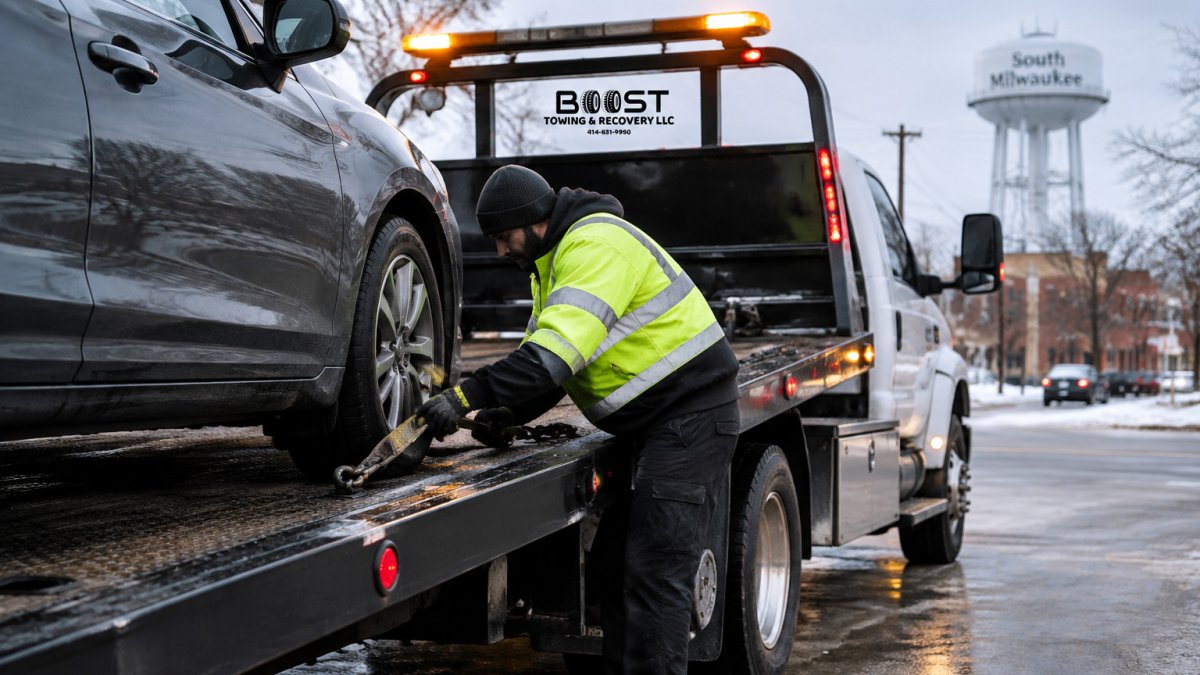
Snow, ice, and heavy rain do two things at once: they slow every truck on the road, and they generate more calls. During winter storms, calls for stalled vehicles and dead batteries tend to increase, so the truck assigned to you may be finishing an earlier job. Fog and lake-effect snow near the Lake Michigan shoreline can reduce speeds further. If a storm is active, expect the upper end of any quoted range.
Time of Day and Overnight Demand
Late-night and early-morning calls can take longer because fewer drivers are on shift, even though traffic is lighter. A 2 a.m. call may have a clear road but a longer wait for a truck, because the nearest available unit could be several miles away. Weekend nights around the bar-close window are another predictable demand peak.
Peak Demand Periods
Holidays, the first snow of the season, and busy commute periods can create backlogs across the industry, so arrival windows on those days may be wider.
Truck and Driver Availability
A truck is only as fast as the driver who can take the call. If the nearest truck is already on another job, the next one may come from farther away, and the ETA reflects that second truck's position.
Distance From the Provider and Vehicle Location
The farther the truck starts from your location, the longer the drive, but location type matters as much as distance. A car in a South Milwaukee parking lot is easier to reach than one on a highway shoulder, where the truck must approach with traffic, set up safely, and sometimes close a lane. Rural roads outside the city can add time for the same reason: the truck may have to travel farther and navigate narrower shoulders.
Service Type and Equipment
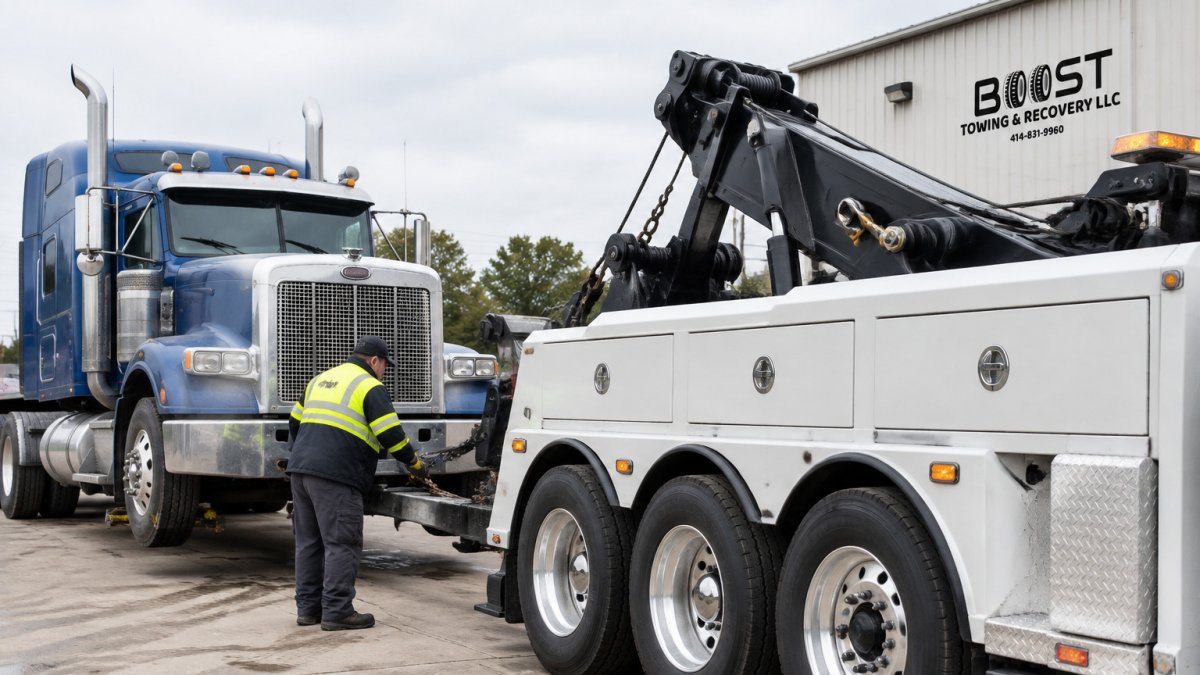
Different jobs need different equipment, and that changes dispatch timing. A jump-start, tire change, or lockout usually goes to a smaller, faster unit. A light-duty tow needs a flatbed or wheel-lift. A heavy-duty recovery, a box truck, bus, or loaded trailer, needs a wrecker that may be farther away and takes longer to set up on scene.
Watch out: if a dispatcher quotes a very short ETA during a storm or rush hour without asking about your vehicle type or exact location, the number is probably a guess rather than a dispatch-based estimate.
South Milwaukee Response Times and Service-Area Boundaries
The type of road you are on often changes the expectation more than the map distance does.
Realistic Expectations by Location Type
Arrival times vary by location type. Highway shoulders, outlying roads, and busy commercial corridors generally take longer to reach than quiet residential streets, and real-time truck position and call volume can move any estimate up or down.
How Service-Area Boundaries Work
A towing company's service area is the geographic zone it will dispatch to as a matter of routine. Inside the boundary, dispatch can usually give you a real ETA. Outside it, the company may still help but often at a longer wait or by referral to a partner. Before you commit, confirm three things:
Is my exact location inside the service area? Give the cross streets, a mile marker, or a landmark, not just the city name.
Is there a mileage or after-hours charge for my distance? Pricing varies by company, so ask for a current quote rather than assuming.
Will the truck come from a nearby yard or a distant one? That answer drives the ETA more than anything else.
Why the Nearest Truck May Not Be the Closest One on the Map
A truck that appears close on a map may be on another call or not equipped for your job, which is why the ETA can look longer than the straight-line distance suggests.
Getting an Accurate Local ETA
When you call, lead with your exact location and vehicle type, then ask for a window rather than a single time. A dispatcher who asks follow-up questions, cross street, vehicle make and model, whether you are on a shoulder or in a lot, is building a real estimate. Ask whether you will get a text or call if the ETA changes, and ask what to do while you wait.
How to Evaluate an ETA Before You Book
A useful estimate gives you a range and explains what could change it. Watch for these signs:
The dispatcher asks for your exact location and the vehicle type.
The estimate is given as a window, such as 45 to 60 minutes, rather than a single promise.
The company explains which factors could delay the truck.
You get an update if the truck is running late.
A realistic estimate that accounts for traffic and truck availability is more useful than a single promised time.
Questions to Ask a Towing Company Before You Book
Ask these questions to set clear expectations:
What is the estimated arrival time for my location right now?
Which truck type are you sending, and will it handle my vehicle?
Will I get a text or call if the ETA changes?
Is there an additional charge for after-hours or mileage? Pricing varies, so ask for a current quote from the company directly.
What should I do while I wait?
Asking these questions upfront prevents surprises when the truck is already on the way.
Insurance Roadside Assistance Response Time and Staying Safe While You Wait
Many auto insurance policies include roadside assistance. Check your policy for coverage limits, covered services, and any stated arrival window. Your insurer or the assistance line can tell you whether a particular call qualifies.
Safety While Waiting
While you wait, take steps to protect yourself:
Move your car as far from traffic as you safely can.
Turn on your hazard lights and stay inside with your seatbelt on if the shoulder is narrow.
Stand well away from the road if you must step out, and keep to the far side of the guardrail.
Keep your phone charged and stay reachable for the dispatcher.
Avoid standing between your car and passing traffic, especially on highways.
Booking Your Tow With Boost Towing & Recovery LLC
Boost Towing & Recovery LLC offers 24/7 towing and roadside assistance across southeastern Wisconsin, including flatbed and wheel-lift transport, lockouts, jump-starts, and flat tire repair. For a non-emergency tow, you can schedule a vehicle towing service that matches your timing and destination. If you need help right away, our comprehensive roadside assistance and towing services cover the most common breakdowns.
If you have questions about arrival times before you book, contact our team and ask for a current estimate. For more on local response times, read Emergency Towing in South Milwaukee: How to Get Help Fast, and check what areas emergency roadside assistance covers before you call.
Frequently Asked Questions
How long does a tow truck take to arrive?
Arrival times vary widely with location, time of day, weather, and how many calls a provider is handling. Many towing and roadside-assistance companies quote a general window rather than a guaranteed minute count, so treat any single number as an estimate. Ask the dispatcher for an estimated time of arrival when you call, and ask for an update if the truck is delayed. Calls during storms, rush hour, or overnight often take longer than daytime requests on clear roads.
Can a towing company guarantee an arrival time?
Most towing companies give an estimated arrival time rather than a guarantee, because traffic, weather, truck availability, and the distance to your location can all change after dispatch. A reputable provider will tell you its typical response range, explain what could cause a delay, and keep you updated if the estimate changes. Be cautious of any company that promises an exact arrival time without knowing your location or current conditions.
How long does roadside assistance take through insurance?
Roadside assistance through an insurance policy usually depends on the provider the insurer dispatches, your location, and current demand. Your policy documents or the claims line can tell you the service provider and its typical response range. If you are waiting longer than the estimate, call your insurer's roadside line for an update and confirm the provider has your correct location and callback number.
What should I ask a towing company when I call?
Ask for an estimated time of arrival, the exact location they have on file, and the type of truck being sent. Confirm the total price or how pricing is calculated, including any after-hours or mileage charges, before the truck arrives. Ask how you will receive ETA updates and what number to call if the driver is delayed. Boost Towing & Recovery LLC can provide current pricing and a quote on its website.
Comments