

Emergency Battery Jump Start Service: 2026 Review
Table of Contents
How Emergency Battery Jump Start Service Works
What Roadside Assistance Cost Looks Like in 2026
How to Jump Start a Car Safely: Step-by-Step
Signs of a Dead Car Battery You Shouldn't Ignore
Top Emergency Battery Jump Start Service Providers
Portable Jump Starters vs Professional Service: Which Wins?
Conclusion: Choosing the Right Jump Start Service
Frequently Asked Questions
Last Updated: September 30, 2026
How Emergency Battery Jump Start Service Works
An emergency battery jump start service dispatches a mobile technician to your location to revive a dead battery and get your vehicle running again. This is a roadside assistance service that brings the power source to you rather than requiring a tow.
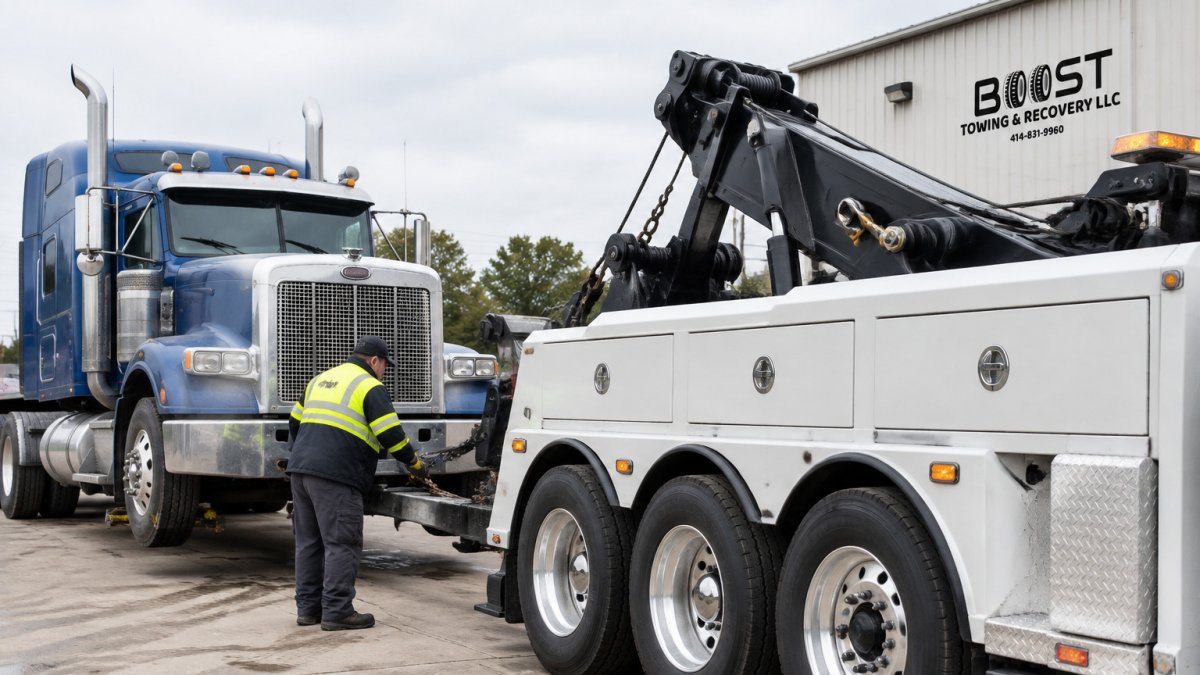
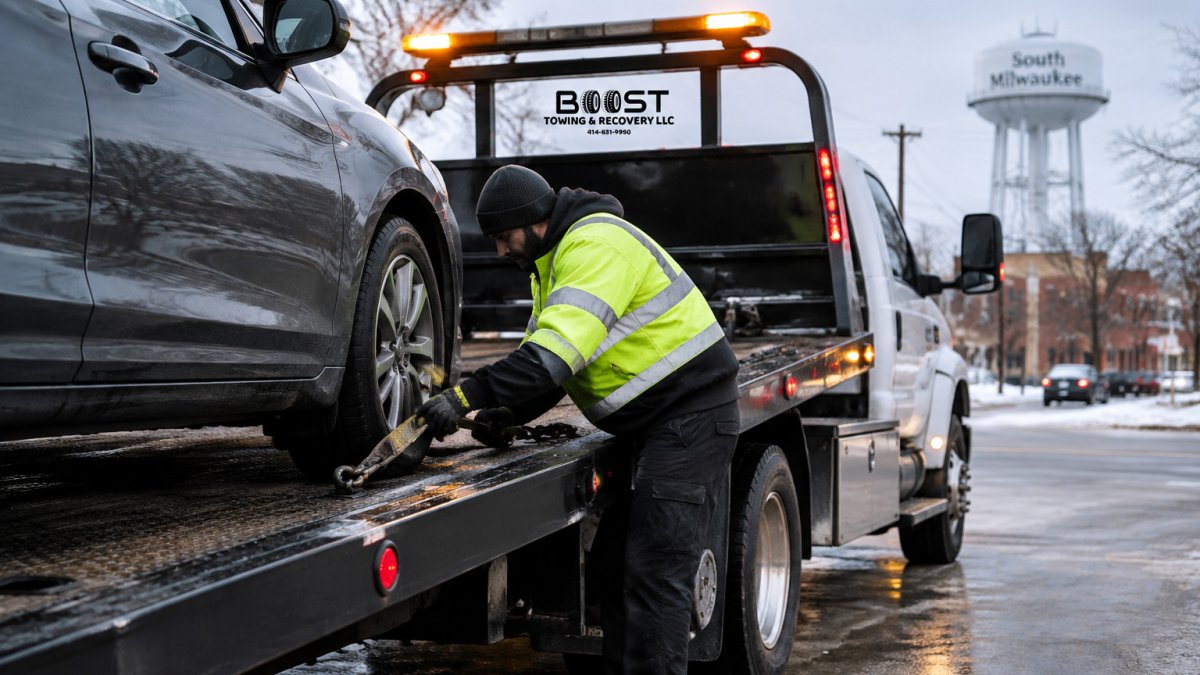
At Boost Towing & Recovery LLC, we handle these calls daily across southeastern Wisconsin and the central Midwest. The process starts when you call or book online. A dispatcher confirms your location, vehicle type, and the problem. Then a mobile technician is sent with professional-grade jump packs and diagnostic tools.
Response times vary by location and traffic.
When the technician arrives, they test your battery and charging system first. This matters because a jump start won't help if your alternator is failing. After confirming the battery is the issue, they connect a commercial jump pack or jumper cables and start your vehicle.
Pro Tip Ask the dispatcher for a total cost estimate before confirming the service call. Reputable providers give you a clear number upfront, including any after-hours fees. If they won't quote a price, call someone else.

What Roadside Assistance Cost Looks Like in 2026
Most drivers searching for a jump start want one number first: what will this cost me? Here is the honest breakdown, plus the variables that move the final bill.
Typical price ranges for a jump start service call:
Standard daytime call: $75 to $125 for a jump start within a provider's base service radius
After-hours, weekend, or holiday calls: $100 to $175, reflecting the surcharge most providers apply outside normal business hours
Mileage beyond the base radius: $2 to $4 per mile, with base radii commonly set between 10 and 25 miles
Battery replacement on-site: $150 to $300 total, including the battery, installation, and disposal of the old unit
Diagnostic add-on: $25 to $50 if you want the technician to test the alternator and charging system, not just the battery
What actually drives your final bill:
Time of day: Late-night and holiday calls carry after-hours surcharges, often 25 to 50 percent above the base rate
Distance: Providers charge per mile beyond a base radius, so a rural breakdown costs more than a driveway call
Service type: A jump start costs less than a battery replacement, and a replacement costs less than a tow
Membership status: Some providers discount for members, but you pay an annual fee whether you use the service or not
Vehicle type: Some providers charge more for diesel engines, large trucks, or vehicles with batteries in hard-to-reach locations
Membership versus pay-per-use, by the numbers:
AAA membership starts around $60 per year for the basic tier and includes a set number of service calls, with additional calls billed per incident. Pay-per-use providers charge only when you need help, which means a single jump start can cost less than a year of membership, but a second breakdown in the same year flips the math.
The break-even is roughly two service calls per year. If you travel frequently, drive an older vehicle, or have family members on your policy, membership tends to win. If you drive a newer car and rarely break down, pay-per-use is usually cheaper.
For a specific quote from Boost Towing & Recovery LLC, contact us directly. We provide upfront pricing before we dispatch a truck.
How to Jump Start a Car Safely: Step-by-Step
Jump starting a car safely requires the right equipment and proper connection order. Doing it wrong can damage your vehicle's electronics or cause a battery explosion.
Here's the correct sequence:
Park the working vehicle close enough for cables to reach, but not touching
Turn off both engines and all accessories
Connect the red clamp to the positive terminal of the dead battery
Connect the other red clamp to the positive terminal of the good battery
Connect the black clamp to the negative terminal of the good battery
Connect the final black clamp to an unpainted metal surface on the dead car's engine block
Start the working vehicle and let it run for 2-3 minutes
Try starting the dead vehicle
Once started, remove cables in reverse order
Never connect the black clamp directly to the dead battery's negative terminal.
Signs of a Dead Car Battery You Shouldn't Ignore
A dead battery rarely fails without warning. Recognizing the signs early can save you from being stranded.
Watch for these indicators:
Slow engine crank: The engine turns over sluggishly before starting
Dim headlights: Lights appear weaker than usual, especially at idle
Clicking sound when starting: A rapid click indicates insufficient power
Dashboard warning lights: The battery light may illuminate
Swollen or cracked battery case: Physical damage means immediate replacement
Age: Most batteries last 3-5 years; after that, testing is wise
Watch Out If your battery is more than four years old and you're experiencing slow starts, don't wait for a complete failure. A dead battery at home is inconvenient. A dead battery on the interstate at night is dangerous.
Top Emergency Battery Jump Start Service Providers
Several providers offer emergency battery jump start service, each with different strengths. The right choice depends less on brand name and more on how you drive, where you drive, and how much you want to pay upfront versus per incident.
Provider | Service Type | Best For | Coverage |
Boost Towing & Recovery LLC | 24/7 dispatch, jump starts, battery replacement | Drivers needing reliable local service | Southeastern Wisconsin and central Midwest |
AAA | Membership-based roadside assistance | Frequent travelers wanting nationwide coverage | Nationwide |
Mach1 Services | App-based on-demand dispatch | Tech-savvy drivers avoiding memberships | Select metro areas |
Five Star Roadside Assistance | Per-service jump starts and battery testing | Drivers wanting on-site diagnostics | Regional |
How to choose, based on how you actually drive:
You commute locally and rarely road-trip: A local provider like Boost Towing & Recovery LLC is usually the fastest and cheapest option, because you're inside the service radius and avoid membership fees.
You take long road trips or drive a high-mileage vehicle: A nationwide membership like AAA makes sense, because the coverage follows you across state lines.
You want price transparency and don't want a subscription: An app-based network like Mach1 Services lets you see the cost before you commit.
You suspect the battery is failing, not just dead: A provider that includes on-site testing, like Five Star Roadside Assistance or Boost Towing & Recovery LLC, saves you a second call.
What "coverage" really means:
Key Takeaway Match the provider to your driving pattern, not the brand. Local drivers win with local providers; frequent travelers win with nationwide memberships; anyone unsure about battery health should pick a provider that tests and replaces on-site.
Portable Jump Starters vs Professional Service: Which Wins?
A portable jump starter is a rechargeable device you keep in your vehicle. It lets you jump your own battery without another car or a service call. Professional service sends a trained technician to handle it for you.
Here's when each option makes sense:
Situation | Best Choice |
Dead battery in your driveway | Portable jump starter |
Dead battery on a highway shoulder | Professional service |
You're comfortable with basic car maintenance | Portable jump starter |
You're unsure what's wrong | Professional service |
You need a battery replacement too | Professional service |
You want zero physical effort | Professional service |
Key Takeaway Carry a portable jump starter for convenience, but know when to call a professional. If a jump doesn't work or your battery is over four years old, professional diagnosis saves time and prevents repeat breakdowns.
Conclusion: Choosing the Right Jump Start Service
A dead battery can happen anywhere, and having a plan matters more than hoping it won't. Whether you carry a portable jump starter or rely on professional roadside assistance, knowing your options keeps you from being stranded.
Frequently Asked Questions
How much does a jump start service cost?
Roadside assistance cost for a jump start varies depending on your location, time of day, and provider. Membership programs like AAA include jump starts. Portable jump starters are available as a one-time purchase. Always request a quote upfront to avoid after-hours or mileage surcharges.
How long does an emergency battery jump start service take to arrive?
Response times vary by provider and location. Urban areas tend to see faster response times than rural routes. When you call, ask for an estimated arrival window and confirm whether any after-hours fees apply. Having your exact location and vehicle details ready speeds up dispatch.
What are the signs of a dead car battery?
Common signs of a dead car battery include slow engine cranking, dim headlights, a clicking sound when you turn the key, and dashboard warning lights. If your battery is over three years old and you notice these symptoms, have it tested. A professional can perform a voltage test on-site and determine whether a jump start or battery replacement is needed.
Is it better to call a professional or use a portable jump starter?
It depends on your comfort level and situation. A portable jump starter like the NOCO Boost Plus GB40 lets you restart your car without waiting for a service truck. However, if your battery is failing or you're unsure about the cause, a professional jump start service can test your battery and alternator on-site, saving you from a repeat breakdown.
Does roadside assistance cover battery replacement?
Many roadside assistance providers offer battery replacement as an add-on or included service. AAA, for example, provides mobile battery testing and replacement. Independent providers like Boost Towing & Recovery LLC also handle on-site battery replacement if a jump start isn't enough. Ask your provider whether replacement is covered or if there's an additional service call fee.
Book Online

Comments