

Is Flatbed Towing Safer for Cars? A 2026 Guide
Table of Contents
Is Flatbed Towing Safer for Cars? The Short Answer
Flatbed vs. Wheel-Lift Towing: How the Two Methods Differ
How a Wheel-Lift Truck Works
How a Flatbed Truck Works
Safety Features and Risks in Each Towing Method
Is Flatbed Towing Safer for AWD Cars?
When Does a Car Need a Flatbed Tow?
How Cars Are Secured on a Flatbed Tow Truck
What to Ask Before You Book a Tow
Frequently Asked Questions
Last Updated: October 20, 2026
Is Flatbed Towing Safer for Cars? The Short Answer
Yes. For most modern vehicles, flatbed towing is the safer choice. A flatbed carries all four wheels off the ground, so the drivetrain, transmission, and body panels never take the load that a wheel-lift places on two wheels and a bumper.
That matters more than most drivers realize. All-wheel-drive systems, low-clearance bumpers, and electronic parking brakes all create failure points on a two-wheel tow. At Boost Towing & Recovery LLC, we run both flatbed and wheel-lift trucks across southeastern Wisconsin and the central Midwest, and we tell customers the same thing every time: when the car's drivetrain or bodywork is the concern, the flatbed wins.
Below, we break down how each method works, where the real risks sit, and how to decide which one your car actually needs.
Key Takeaway Flatbed towing protects the whole vehicle because nothing rolls on the road. Wheel-lift towing is faster and often fine for simple front-wheel-drive cars, but it puts load on the suspension and drivetrain.
Flatbed vs. Wheel-Lift Towing: How the Two Methods Differ
Flatbed vs. wheel-lift towing comes down to one question: do any of the car's wheels touch the road during transport? On a flatbed, none do. On a wheel-lift, two do.
A wheel-lift truck lifts one end of the vehicle with a metal yoke and tows it on the remaining wheels. A flatbed truck winches the entire vehicle onto a level deck and straps it down. The difference sounds minor. In practice, it changes how much stress the car absorbs.
How a Wheel-Lift Truck Works
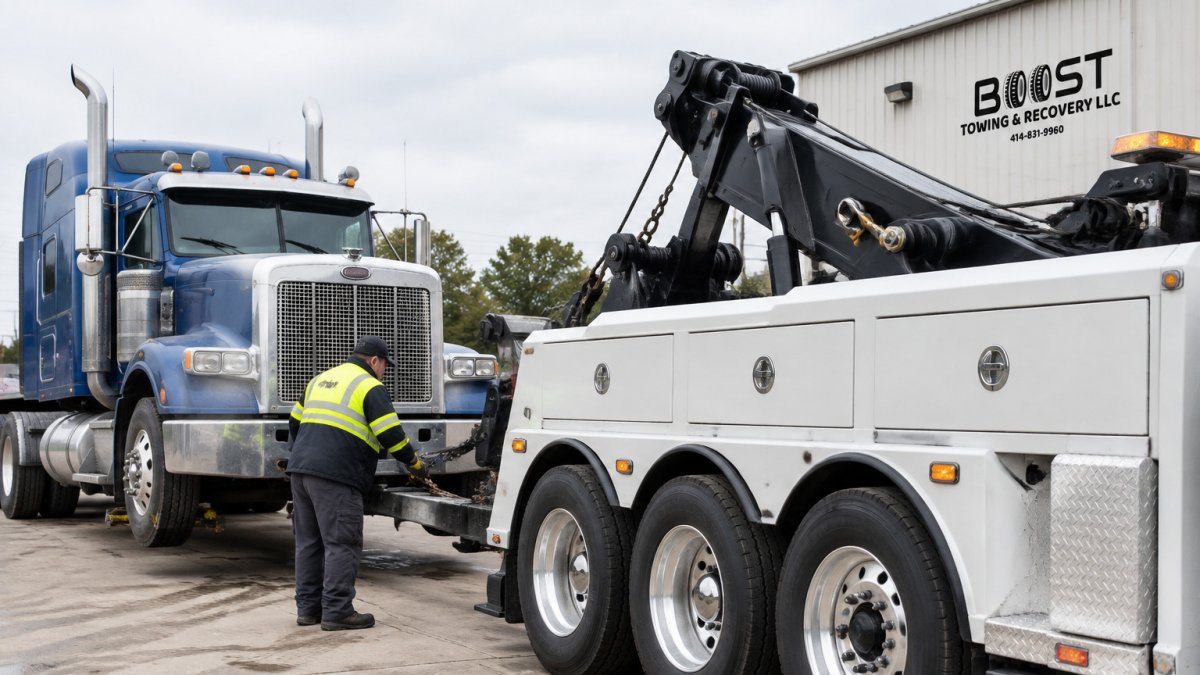
The operator backs the truck up, lowers a steel yoke, and slides it under the front or rear tires. A hydraulic lift raises that end of the car, and the vehicle rolls on its remaining two wheels.
Wheel-lift trucks are cheaper to run and quicker to deploy. That speed is why they dominate quick roadside calls. The trade-off: the lifted end hangs from its tires, and the rolling end spins freely against the pavement.
How a Flatbed Truck Works
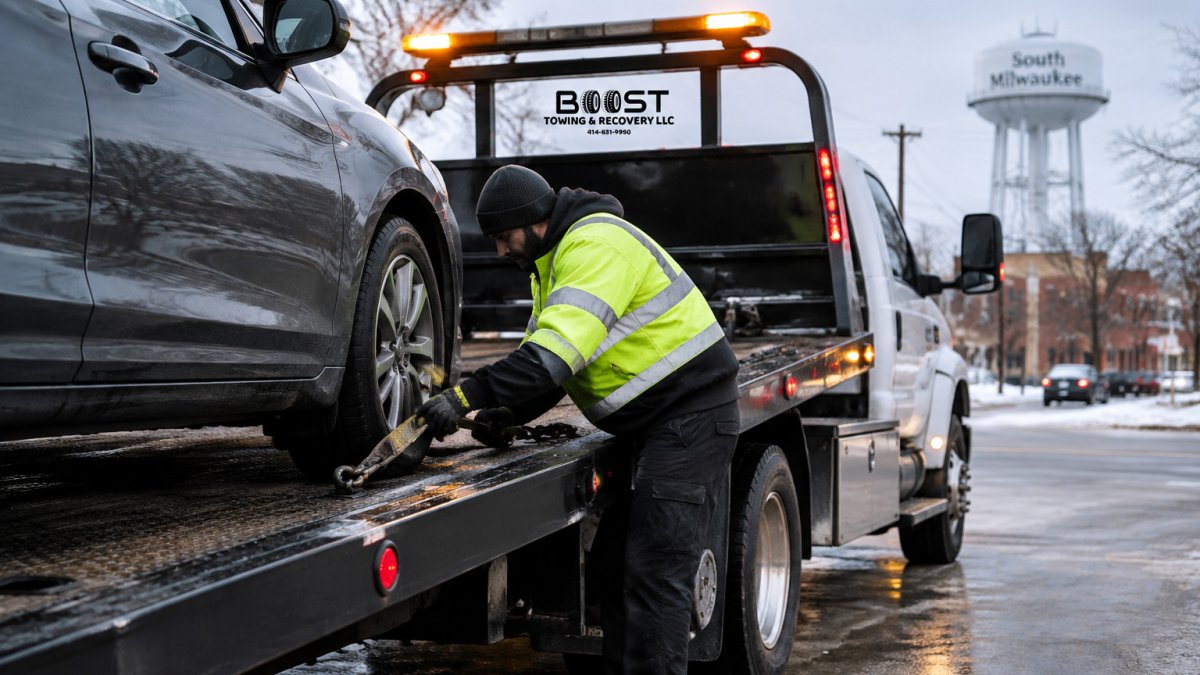
The operator tilts the deck to the ground, winches the car up by its frame or tow points, and levels the bed. All four wheels sit on the platform. Straps and wheel chocks hold the car in place for the whole trip.
Loading takes longer, and the truck is larger. What you get in return is a vehicle that rides exactly as it sits in a parking spot: level, supported, and off its suspension.
Feature | Flatbed | Wheel-Lift |
Wheels on the road | None | Two |
Best for | AWD, low-clearance, luxury, damaged cars | Simple front-wheel-drive cars |
Loading time | Longer | Faster |
Drivetrain stress | Minimal | Higher |
Risk to body panels | Low | Moderate |
Safety Features and Risks in Each Towing Method
Every tow involves two risk categories: risk to the vehicle and risk to everyone on the road. The methods differ on both.
On a flatbed, the main risks are loading errors. A car winched up at the wrong angle can scrape a bumper, and a strap routed over a brake line can crush it. Those are operator mistakes, not flaws in the method, and a careful driver avoids them.
Wheel-lift towing carries different risks. The towed wheels spin, so the transmission and differential turn without lubrication pressure in some configurations. Bumpers and air dams sit close to the yoke. On uneven pavement, the dangling end can sway.
Flatbed safety edge: the car stays fully supported and level, with no drivetrain rotation.
Wheel-lift safety edge: faster setup, which matters on a live highway shoulder.
Flatbed weak point: longer loading time and a bigger footprint on narrow streets.
Wheel-lift weak point: stress on suspension, drivetrain, and bumper covers.
Watch Out Towing an all-wheel-drive or four-wheel-drive vehicle on a wheel-lift can damage the transmission and differential. The repair often costs far more than the tow would have. If you are unsure of your drivetrain, ask for a flatbed.
Is Flatbed Towing Safer for AWD Cars?
For all-wheel-drive cars, flatbed towing is the safer method, and it is usually the only correct one. AWD systems link all four wheels through the drivetrain. Lift two wheels and let the other two roll, and the system spins components that were never meant to turn without the engine running.
Manufacturers generally specify flatbed transport for AWD and 4WD vehicles in their owner's manuals. That guidance is worth following. A tow that ignores it can leave you with a repair bill for a transfer case or transmission.
The same logic applies to rear-wheel-drive cars, many electric vehicles, and anything with a locking differential. If all four wheels are connected, all four wheels should ride on the deck.
When Does a Car Need a Flatbed Tow?
A car needs a flatbed tow whenever the drivetrain, bodywork, or ride height makes a two-wheel tow risky. Common situations include:
All-wheel-drive or four-wheel-drive vehicles
Electric vehicles and hybrids with regenerative braking systems
Cars with low ground clearance or aftermarket body kits
Vehicles with damaged suspension, steering, or wheels
Luxury and exotic cars where paint and panels are the priority
Cars that will not roll, brake, or steer under their own power
For a simple front-wheel-drive sedan with a dead battery, a wheel-lift is often perfectly adequate. For anything on that list, ask for the deck.
How Cars Are Secured on a Flatbed Tow Truck
Securing a car on a flatbed follows a set sequence, and each step protects a different part of the vehicle. Operators winch the car up the tilted deck, center it, and set the parking brake. Then they strap it down at four points, usually through the frame or dedicated tie-down slots rather than over body panels.
Wheel chocks or baskets block forward and backward movement. Soft straps protect painted wheels and alloy rims. A final check confirms the deck is level, the straps are tight, and nothing rubs against a brake line or fuel line.

A good operator walks the vehicle once more before pulling away. That last look catches loose straps, a misrouted hook, or a chock that slipped, which is exactly the kind of detail that separates a clean tow from a damaged bumper.
What to Ask Before You Book a Tow
Ask three questions before you book: what drivetrain does my car have, will the truck be a flatbed or a wheel-lift, and what is the total price including after-hours and mileage charges. The answers tell you whether the tow fits your vehicle and your budget.
Here is a quick checklist we would run through ourselves:
Confirm the truck type: flatbed or wheel-lift
State your drivetrain: AWD, 4WD, FWD, or RWD
Mention any low clearance, body kits, or damage
Ask for an upfront quote with all fees included
Confirm the driver handles specialty or exotic vehicles
Get an arrival window in writing
If you are stranded near South Milwaukee or anywhere across southeastern Wisconsin, Boost Towing & Recovery LLC runs both flatbed and wheel-lift trucks around the clock. Our drivers handle lockouts, jumpstarts, flat tires, and fuel delivery on the same call, and we can move up to two vehicles at once when a family is stuck mid-trip. Contact us today for a quote and experience the professional care of our expert recovery team.
Pro Tip Snap a photo of your car's drivetrain badge or owner's manual page before you call. Telling the dispatcher "AWD" versus "FWD" takes ten seconds and can save you a transmission repair.
For general guidance on vehicle transport standards, the Federal Motor Carrier Safety Administration publishes rules that govern commercial towing and securement on U.S. highways. The National Highway Traffic Safety Administration also maintains recall and safety information worth checking before a long transport.
Frequently Asked Questions
Is flatbed towing safer for cars?
For most cars, yes. Flatbed towing keeps all four wheels off the ground, so the drivetrain, suspension, and body are not subjected to rolling load or lift stress. It also removes the risk of a wheel-lift sling rubbing against bumpers or side skirts. That said, safety depends on the operator. A trained driver who uses proper straps, wheel chocks, and tie-down points will protect your vehicle on either method. Flatbed towing simply removes more variables.
Is flatbed towing safer for AWD cars?
It is the safest common option for all-wheel-drive vehicles. Towing an AWD car with two wheels on the ground can spin the transfer case and damage the center differential, even over short distances. A flatbed carries all four wheels, so the driveline stays still. If you own an AWD vehicle, ask for a flatbed when you call, and confirm the operator has handled your model before.
Can wheel-lift towing damage a car?
It can if the operator is careless or the vehicle is a poor fit. Wheel-lift trucks lift two wheels and let the other two roll, which puts load on the suspension and can stress a transmission or transfer case on AWD and 4WD vehicles. The lift arms and sling can also contact low bumpers, side skirts, and aftermarket wheels. A wheel-lift is fine for many front-wheel-drive cars when used correctly, but it is not the right tool for every vehicle.
When does a car need a flatbed tow?
Book a flatbed when the car is AWD or 4WD, has low ground clearance, has a damaged wheel, tire, or suspension component, or is a luxury or specialty vehicle. A flatbed is also the right call after a collision when the body or frame may be bent, and for long-distance transport where you want the car fully off the road. If you are unsure, describe the vehicle and the damage when you call and let the dispatcher recommend the method.
A breakdown or a dead battery rarely happens at a convenient moment, and the tow you choose can protect your car or quietly damage it. Boost Towing & Recovery LLC offers 24/7 flatbed and wheel-lift service, a full-service repair facility, and upfront quotes across South Milwaukee and the surrounding region. Get started with Boost Towing & Recovery LLC and book online for a tow that treats your vehicle like it is our own.
Book Online

Comments