

Towing Exotic Cars Safely: 7 Essential Tips
Table of Contents
Towing Exotic Cars Safely Starts With Knowing What Can Go Wrong
Flatbed Towing for Luxury Cars: Why It's the Only Safe Option
Low-Clearance Car Towing: Loading Without Scraping or Stress
How to Prepare a Car for Towing: A Step-by-Step Checklist
Long-Distance Exotic Car Transport: What Changes Over the Miles
Common Mistakes to Avoid When Towing Exotic Cars
How to Choose the Right Towing Service for Your Exotic Car in South Milwaukee
Frequently Asked Questions
Last Updated: October 15, 2026
Towing Exotic Cars Safely Starts With Knowing What Can Go Wrong
Towing exotic cars safely is less about the truck and more about the decisions made before the wheels ever leave the ground. A Ferrari, Lamborghini, or classic Porsche sits just inches off the pavement, and one wrong strap or steep ramp angle can turn a routine tow into a five-figure repair. At Boost Towing & Recovery LLC, we handle specialty vehicles across southeastern Wisconsin.
Here's the core problem: exotic cars are built for performance, not for being dragged. Low ground clearance, wide tires, stiff suspensions, and delicate body panels all work against a standard tow setup.
The good news? Almost every risk is preventable.
Below, we'll walk through the exact methods, prep steps, and mistakes to avoid so your car arrives exactly as it left.
Flatbed Towing for Luxury Cars: Why It's the Only Safe Option
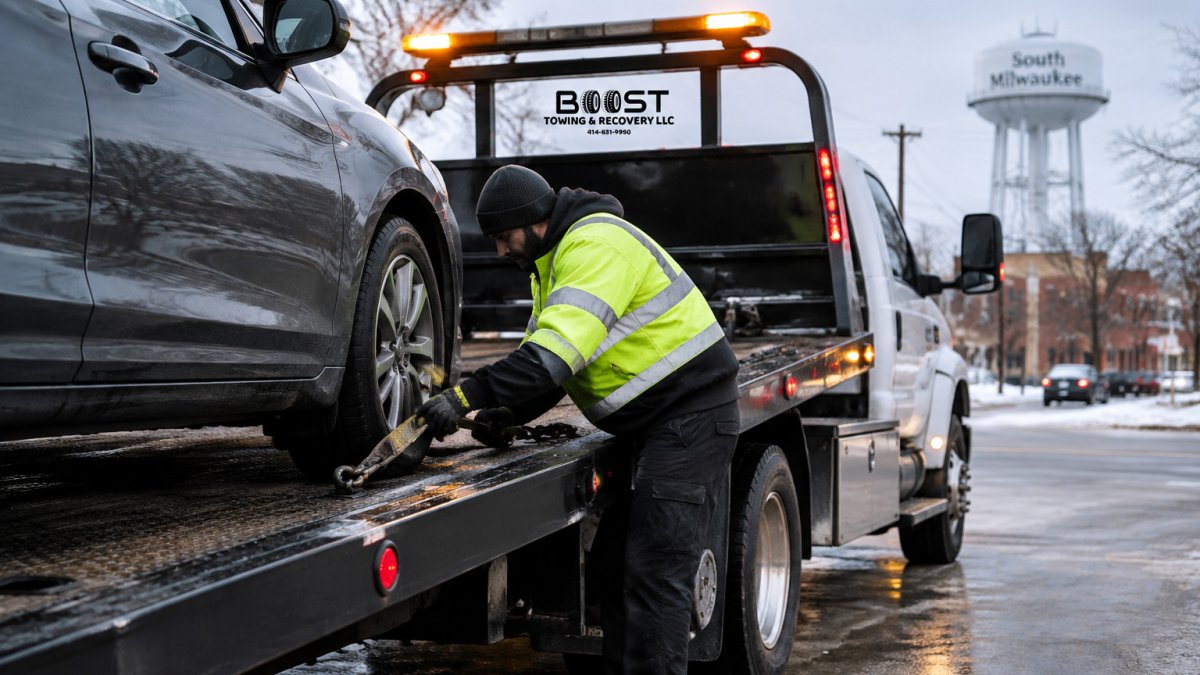
Flatbed towing for luxury cars is the only method that fully protects the vehicle, because all four wheels stay off the ground and the car rides on a stable platform instead of being pulled. Wheel-lift and hook-and-chain setups put stress on the drivetrain, bumper, and suspension that these cars were never designed to take.
A few reasons flatbed wins every time:
All four wheels are stationary, so no drivetrain wear
The car sits level, which protects the front splitter and rear diffuser
Soft straps go around the tires, not the frame or body
The platform absorbs road bumps instead of the suspension
All-wheel-drive exotics make this even more important. Towing one with two wheels on the ground can damage the transfer case. The NHTSA guidance on vehicle towing and safety backs up the point that improper towing can create both mechanical and road-safety hazards.
Watch Out Never let a driver hook a chain to your control arms, frame rails, or suspension components. That approach can bend structural parts that cost thousands to replace, and the damage often shows up weeks later.
Low-Clearance Car Towing: Loading Without Scraping or Stress
Low-clearance car towing comes down to angle and patience. A car with three or four inches of ground clearance cannot climb a standard ramp without help, so the operator has to reduce the angle before the tires ever touch the incline.
The tools that make this work:
Wooden blocks or angle boards under the ramp base
Extended ramps that lower the approach angle
A spotter guiding the driver or winch line
Slow, steady winching instead of fast pulls

What most guides miss is that the rear can scrape on the way up too. As the front climbs, the rear bumper drops. A good operator watches both ends, not just the front lip.
Pro Tip Ask the operator to use angle boards before loading, not after something scrapes. Once the bumper touches the ramp, the damage is already done.
How to Prepare a Car for Towing: A Step-by-Step Checklist
Knowing how to prepare a car for towing protects both the vehicle and everyone on the road. Most prep takes under ten minutes and prevents the most common tow-related damage.
Here's the checklist we use:
Turn the engine off and set the parking brake
Put the transmission in Park (or first gear for manual)
Disengage the parking brake only when the operator says so
Remove or fold in mirrors if they extend past the body
Take out loose items, toll transponders, and dash cams
Note any existing scratches, dents, or cracks with photos
Tell the operator about any aftermarket aero, splitters, or lowered suspension
Confirm the tow points and whether the car has a factory tow hook
Disable the alarm or provide the fob so it doesn't trigger mid-tow
Lock the car only after loading is complete
That last point matters more than people think. A locked exotic with an active tilt sensor can scream its alarm the entire trip.
Long-Distance Exotic Car Transport: What Changes Over the Miles
Long-distance exotic car transport is a different job than a five-mile tow. Over hundreds of miles, the risks shift from loading damage to things like strap loosening, weather exposure, and driver fatigue.
What changes:
Straps need re-checking at every stop
Enclosed transport becomes worth considering for show cars and classics
Route planning matters for low cars and rough roads
The driver needs proper rest breaks, not a sprint
If you're moving a car from South Milwaukee to another state, ask whether the service uses an enclosed trailer or an open flatbed. Both work. Enclosed just adds a layer of protection against road debris and weather.
Common Mistakes to Avoid When Towing Exotic Cars
The biggest mistakes when towing exotic cars all trace back to speed and shortcuts. Operators who rush cause the damage that careful ones avoid.
Watch for these:
Using a wheel-lift on an all-wheel-drive car
Skipping angle boards on a lowered vehicle
Strapping over the body instead of the tires
Ignoring aftermarket aero that changes clearance
Letting an uninsured or unverified operator touch the car
Assuming every tow company knows exotics
The last one is the most expensive. Not every driver has handled a mid-engine car, and the loading technique is different from a front-engine sedan.
Key Takeaway The single best protection for an exotic car is a driver who has towed one before. Ask directly. A confident "yes, we handle these regularly" beats a cheap quote every time.
How to Choose the Right Towing Service for Your Exotic Car in South Milwaukee
Choosing the right service comes down to three questions: Do they use flatbeds? Have they handled exotics? Can they give you a clear quote upfront?
For drivers in South Milwaukee and across southeastern Wisconsin, Boost Towing & Recovery LLC is built around exactly these concerns. We run flatbed and wheel-lift trucks, operate 24/7, and handle specialty vehicles with the care they need. Our team can move up to two vehicles at once, and we offer full-service repairs if something needs attention after the tow.
A few things to confirm before you book anyone:
Flatbed availability for your vehicle type
Clear pricing before the truck arrives, with no surprise after-hours fees
Insurance and licensing you can verify
Experience with low-clearance and all-wheel-drive cars
If you're searching for exotic car towing near me in the Milwaukee area, ask those questions first. The right answer saves you a repair bill.
What to Check | Why It Matters | Red Flag |
Flatbed access | Protects drivetrain and body | Only wheel-lift available |
Exotic experience | Correct loading technique | "We tow everything" |
Upfront quote | No surprise fees | Price only after arrival |
Insurance proof | Covers accidental damage | Can't provide it |
Towing an exotic car safely takes the right method, the right prep, and a team that respects what's on the flatbed. If you're in South Milwaukee or anywhere in southeastern Wisconsin and need careful transport for a specialty vehicle, Boost Towing & Recovery LLC is ready around the clock. We offer 24/7 towing, flatbed and wheel-lift transport, and full-service repairs, all with a family-first approach. Book online with Boost Towing & Recovery LLC and get your car moved without the worry.
Frequently Asked Questions
What is the safest way to tow an exotic car?
A flatbed tow truck is the safest option for exotic cars. The entire vehicle sits on the platform with all four wheels off the ground, so there is no stress on the drivetrain, no tire wear, and no risk of body damage from a wheel-lift or sling. Ask the dispatcher to confirm a flatbed is available and that the operator has experience with low-clearance vehicles. If you are in southeastern Wisconsin, Boost Towing & Recovery LLC offers flatbed towing for luxury cars and can walk you through the process before pickup.
How do you load a low-clearance car onto a tow truck without damage?
Operators use ramps with a shallow approach angle, plus wooden blocks or rubber angle boards to extend the ramp and reduce the incline. They may also raise the front of the vehicle slightly with a jack or use a winch to pull the car up slowly. The key is to go slow, watch the front bumper and undercarriage, and adjust the ramp angle as needed. Never let anyone rush this step. If the car has adjustable suspension, raise it to its highest setting before loading.
What should I tell a towing company before it picks up my exotic car?
Give the dispatcher the exact make, model, and year, and mention any modifications like a lowered suspension, aftermarket body kit, or carbon-fiber lip. Tell them the car is low-clearance and requires a flatbed with extended ramps. Ask if the driver has handled your type of vehicle before. Also confirm the pickup location, any gate codes, and whether the car rolls or steers. Clear communication upfront prevents damage and delays.
Can towing damage an exotic car?
Yes, if the wrong equipment or technique is used. Wheel-lift trucks can scratch wheels, damage suspension components, and stress the drivetrain on all-wheel-drive models. Sling towing can crack front lips and bumpers. Flatbed towing avoids these risks when the operator uses proper straps over the tires and secures the car at the correct points. Always inspect the car before and after the tow and document any existing damage with photos.
Book Online

Comments