

How to Safely Shovel Snow Around Your Car?
Table of Contents
Last Updated: November 8, 2026
Snow piled against a car can trap it in minutes, and the wrong shoveling technique can leave you with a sore back, a scratched windshield or worse. Knowing how to safely shovel snow around your car saves time, money and a trip to the emergency room. This guide covers how to assess the situation, clear the car in the right order, and know when to stop digging and call for help.
Assess Snow Depth and How Firmly Your Car Is Stuck
Before you pick up a shovel, check how deep the snow is and how the car is sitting. Look at the tires, the wheel wells and the underside of the bumpers. Wet, packed snow is much heavier than fresh powder, so a shallow drift can still hold a car tight.
Watch out: rocking the car too hard can damage the transmission. Gentle back-and-forth motion is enough.
Walk the perimeter first. If the snow reaches the bottom of the doors or the car sits on its frame, plan for a longer dig and take more breaks.
Clear the Roof, Windows, Lights, and Mirrors First
Start with the top of the car. Snow that slides off the roof while you dig can bury you or fall onto the windshield. Use a snow brush with a soft head, not a metal scraper, to protect the paint and glass.
Work in this order:
Roof and hood
Windshield and rear window
Headlights, taillights and turn signals
Side mirrors
Clear every light before you drive. Drivers can get a ticket for poor visibility, and other drivers need to see you.
How to Safely Shovel Snow Around Your Car Without Tools
If you forgot your shovel, you can still clear a small area. A sturdy plastic lid, a flat piece of cardboard or a dustpan can move loose snow. Your hands work too, but cold fingers lose feeling fast, so keep the work short.
A common mistake is trying to clear everything with your feet or by stomping. Packing the snow down makes it harder to remove. Scoop or push it away instead.
Shovel a Path Around the Car and Dig Out the Tires
Dig out the front and rear of the car first, then the tires. Clear snow away from each tire and the wheel wells so the tires can grip when you pull out. Make a path that runs straight from the tires to the street.

Keep these points in mind:
Push snow to the side, away from the car and the path
Clear down to the pavement so the tires have grip
Do not throw snow onto the car or into the wheel wells
Check the exhaust pipe and clear it so fumes do not build up
Lifting Safely to Protect Your Back and Heart
Shoveling strains the back and heart, especially in cold weather. Bend your knees, keep your back straight and lift with your legs. Hold the shovel close to your body and avoid twisting while you carry a heavy load.
Take breaks every 10 to 15 minutes. If you feel chest pain, shortness of breath or dizziness, stop right away and get medical help.
How to Melt Snow Around Car Tires Safely
Melting and traction aids are two different jobs, and mixing them up is where drivers get into trouble. Hot water is a melting method; sand, salt, and kitty litter are traction methods. Each has a place, and each has a downside around a car's paint, glass, and undercarriage.
Hot water is the riskiest option. Pouring hot water on cold glass can crack a windshield or window, and water that refreezes can lock the tires in place worse than before. If you use warm water at all, keep it away from glass and be ready to clear the slush before it refreezes. A safer approach is to break up ice mechanically with a plastic scraper or the edge of a plastic shovel, then sweep the loosened pieces away.
Salt melts ice by lowering the freezing point of water, but it is corrosive. Rock salt and calcium chloride can dull paint, pit chrome, and accelerate rust on brake lines and undercarriage components. Use salt sparingly, keep it off the car body, and rinse the lower body and wheel wells with fresh water once you are on clear roads. Do not use salt where it will run into storm drains or onto lawns if local rules discourage it.
Sand and non-clumping kitty litter do not melt anything, they add grit so the tires can bite. Spread a thin, even layer under and just in front of the drive wheels, and a little along the path the tires will follow. Too much loose sand can actually reduce grip by letting the tire roll over it, so aim for a light coating rather than a pile.
A few practical trade-offs:
Sand is cheap and paint-safe but heavy to carry and does nothing for ice.
Kitty litter is light and absorbent but breaks down and can turn to mush in wet snow.
Salt is effective on ice but the most damaging to the car and the environment.
Commercial ice-melt products vary widely; read the label and keep them off painted surfaces.
Watch out: if the tires are resting on solid ice, packed snow, or the car is high-centered on its frame, traction aids will not free it. Stop adding material, clear the packed snow from under the tires and the underside of the car, and reassess whether you need a tow rather than continuing to spin the wheels.
The article compares melting and traction methods, each with its own trade-offs for your car.
Method | Best for | Key drawback |
Hot water | Melting ice around tires | Can crack glass and refreeze |
Salt | Melting ice | Corrosive to paint and undercarriage |
Sand | Adding tire grip | Paint-safe but does not melt ice |
Kitty litter | Adding tire grip | Breaks down in wet snow |
Plastic scraper | Breaking up ice mechanically | Safe for glass and paint |
Using Car Mats to Get Out of Snow Safely
Floor mats can give tires the grip they need. Place a mat or piece of cardboard under the drive wheels, then ease forward slowly. Do not spin the tires, since that digs you in deeper and can overheat the engine.
Keep the mats in the car during winter so you always have one ready.
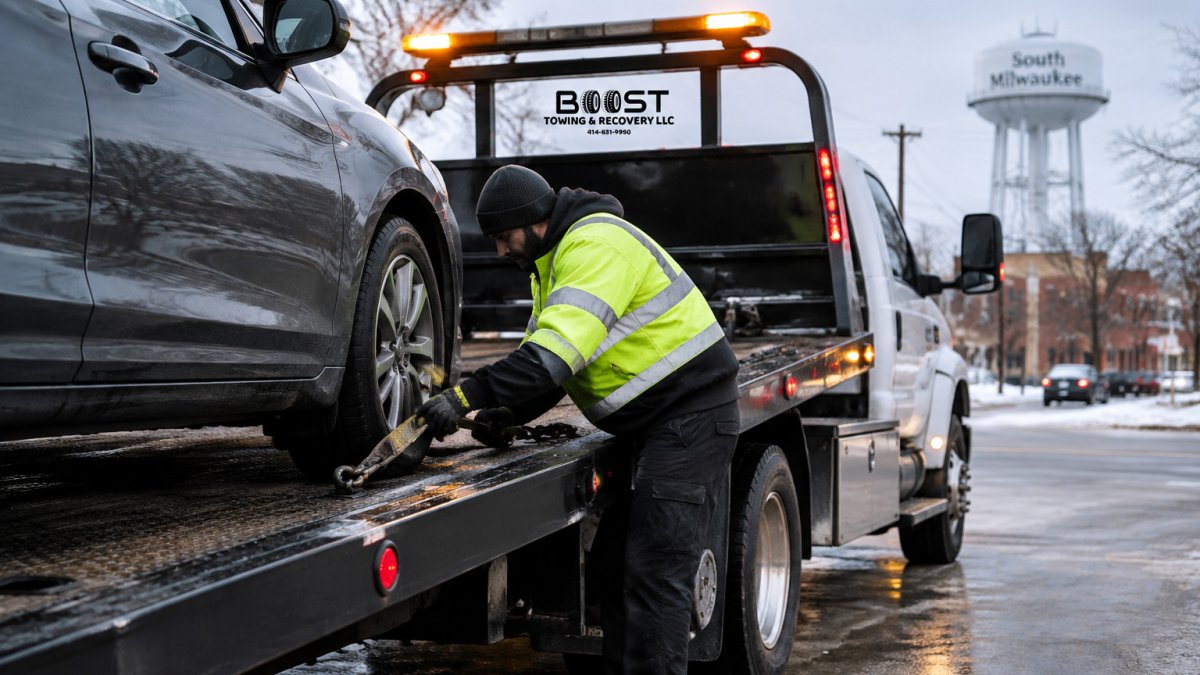
Know When to Stop Digging and Call for Towing Help in South Milwaukee
Stop shoveling and call for help if the car is high-centered, the wheels spin without moving, or you are exhausted. Digging while the engine runs in a closed space can cause carbon monoxide poisoning, so keep the tailpipe clear and never sit in a stuck car with the engine running and the exhaust blocked (the CDC).
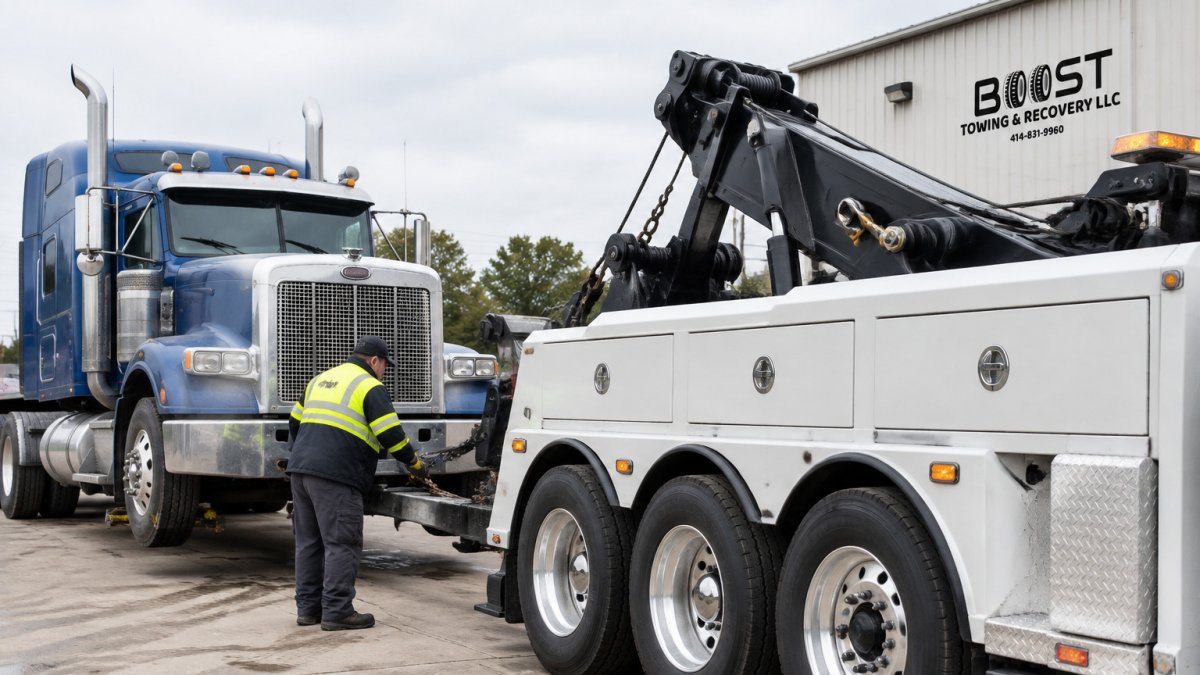
Boost Towing & Recovery LLC provides 24/7 towing and roadside assistance across southeastern Wisconsin, including flatbed and wheel lift transportation. If you need a hand getting unstuck, book a tow or roadside assistance call. For a tire or battery problem on the roadside, see our roadside assistance services. You can also contact the Boost Towing & Recovery LLC team to ask about a pickup.
Not sure whether you need a tow or roadside help? Read our guide on roadside assistance vs towing services in South Milwaukee. When you are ready to pick out tires for the next storm, our best winter tires for icy road conditions comparison can help.
Winter driving is hard on everyone. With the right approach, you can clear your car safely and get back on the road.
Frequently Asked Questions
Should you use a shovel to get snow off your car?
A soft-bristled snow brush or a foam roof rake is the safer choice for clearing the roof, windows, and mirrors. A metal shovel can scratch paint and crack plastic trim or glass edges, especially when snow is frozen. Save the shovel for the ground around the tires and the path behind and in front of the car, where its blade won't touch the paint. Clear the roof first so snow doesn't slide down onto you or the windshield while you work.
How do you avoid scratching your car while shoveling snow?
Keep the shovel blade away from the body panels, glass, and lights. Push snow away from the car instead of scraping along the side, and lift the blade off the ground when you reach the bumpers. Use a plastic shovel for packed snow when you can, since it is less likely to mark paint. Brush off loose snow before you chip at ice, and avoid hitting the car with a shovel or scraper that has ice on the edge.
How do you melt snow around a car without damaging it?
Use a calcium chloride or magnesium chloride ice melt rated for vehicles and concrete, and spread it sparingly around the tires and the path. Avoid pouring hot or boiling water on the car, because the temperature change can crack glass and stress paint. Sand can add traction without melting anything, and it is a good option when temperatures are very low. Clear as much snow as possible by hand before applying any melting product.
How much snow should you clear from around your car before driving?
Clear the snow from around all four tires, the wheel wells, and the area directly in front of and behind the drive wheels so the tires can grip the road. Remove snow from the exhaust pipe, the roof, and all windows and lights before you drive, since snow can block visibility and fall onto the windshield. If the car is high-centered on a pile or the tires are spinning on ice, stop and call for help rather than continuing to accelerate.

Comments