

8 Steps to Prepare for Towing a Trailer Safely
Last Updated: November 5, 2026
Quick Summary
To prepare for towing a trailer, check your owner's manual for towing capacity, payload, and gross vehicle weight rating, then match the loaded trailer weight to those limits. Set up the hitch, coupler, safety chains, breakaway system, wiring, tires, and cargo, and test everything before you drive.
Published tow ratings often apply to stripped-down models, so your loaded truck has less capacity.
Cross safety chains under the tongue in an X pattern so the tongue cannot drop to the pavement.
Tire pressure drops roughly 1 psi for every 10°F fall, so check pressure cold before driving.
Load most cargo weight slightly ahead of the trailer axle to prevent sway.
All-wheel-drive and four-wheel-drive vehicles should go on a flatbed to avoid drivetrain damage.
Table of Contents
Trailer Towing or a Tow-Truck Recovery? Know Which You Need
Towing means two very different things, and mixing them up is where trouble starts. Learning how to prepare for towing begins with one question: are you pulling a trailer behind your own vehicle, or is a tow truck coming to move your car?
Those are separate jobs. Each needs its own checklist.
If you plan to hook up a trailer and drive, you are the operator. You check the vehicle, the hitch, the load, and the road. That is the focus of the steps below.
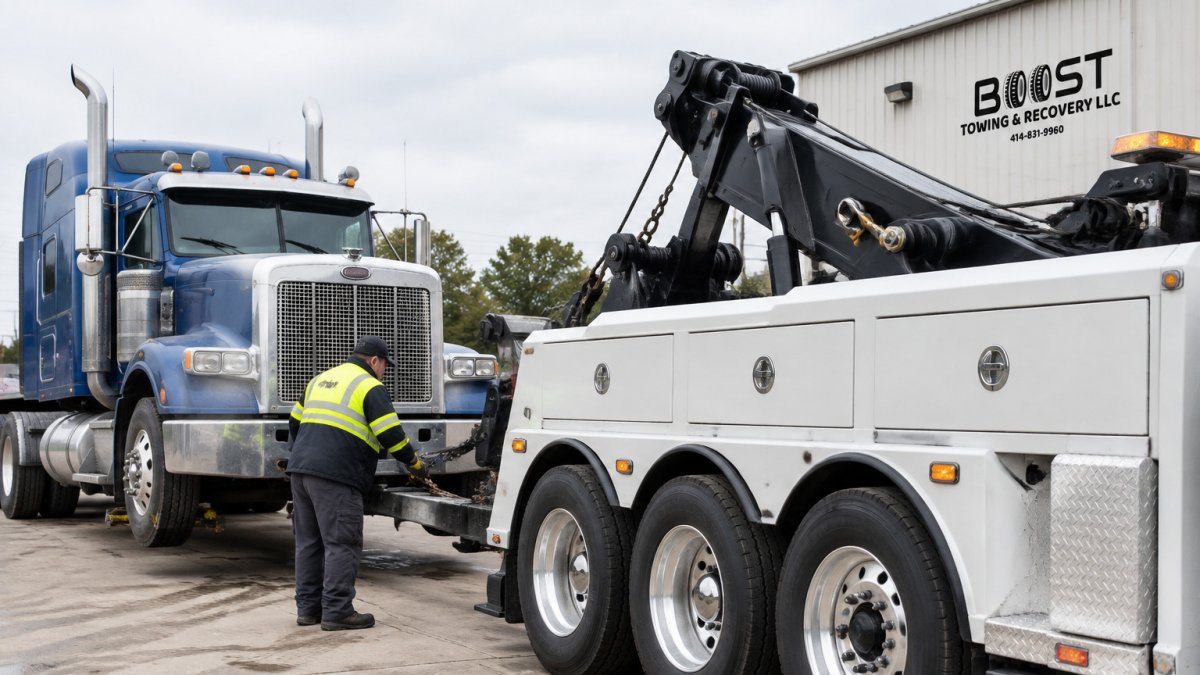
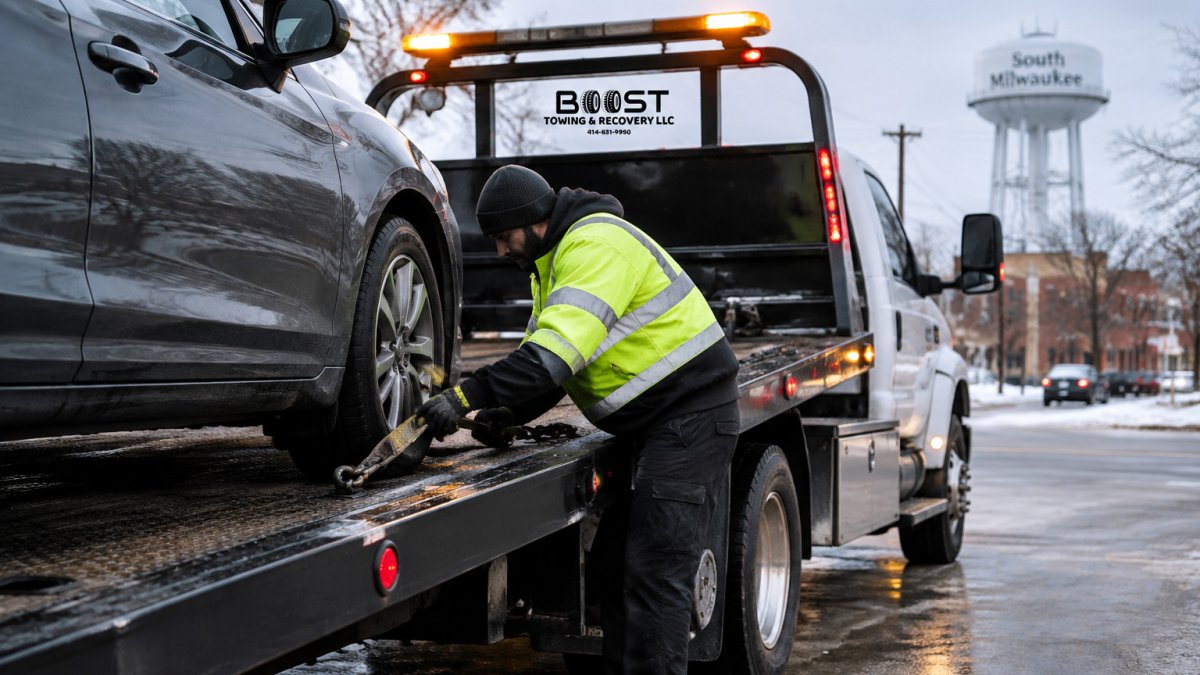
If your car is disabled and needs a ride to a shop, you are not towing. You are arranging a recovery. At Boost Towing & Recovery LLC, we handle that side for drivers across South Milwaukee and southeastern Wisconsin, day or night.
Here is the simple split:
Trailer towing: you drive, you pull, you are responsible for the setup.
Tow-truck recovery: a professional loads your car and hauls it for you.
Roadside help: a jumpstart, lockout, or flat fix so you can drive away yourself.
Most guides blur these together. They should not. The prep work is completely different.
Step 1: Check Your Towing Capacity Before Anything Else
Start with your owner's manual, not the brochure. The manual lists your towing capacity, gross vehicle weight rating, and payload for your exact trim and options.
Towing capacity is the maximum weight your vehicle is rated to pull. It is not a suggestion.
Watch out: published tow numbers often apply to a stripped-down model. Your truck with a full bed, passengers, and gear has less room than the headline figure suggests.
Check three numbers before you touch a trailer:
Towing capacity: the most your vehicle can pull.
Payload: the weight of people, cargo, and tongue weight combined.
Gross vehicle weight rating: the total your loaded vehicle can weigh.
If any of these is unclear, call the manufacturer or a dealer with your VIN. Guessing here is how people wreck transmissions and brakes.
Three ratings in your owner's manual set the limits before you touch a trailer.
Rating | What it means | Note |
Towing capacity | The most your vehicle can pull | Not a suggestion |
Payload | People, cargo, and tongue weight combined | Stay within it for bed and cab |
Gross vehicle weight rating | Total your loaded vehicle can weigh | Confirm with VIN if unclear |
Step 2: Match the Trailer to the Tow Vehicle
A trailer that is too heavy for your vehicle is unsafe no matter how well you drive. Match the trailer's loaded weight, not its empty weight, to your tow rating.
Leave a margin. Many experienced towers aim to stay well under the maximum rather than at it. Hills, heat, and headwinds all eat into your reserve.
Weigh the trailer at a public scale if you can. Loaded weight is almost always higher than owners expect.
A common mistake is buying a trailer first and checking capacity later. Do it in the other order.
Step 3: Set Up the Hitch, Coupler, and Weight Distribution
Your hitch, receiver, coupler, and hitch ball must all match the trailer and the load. A mismatched ball size lets the coupler pop loose under load, and that failure happens at the worst possible moment.
Start with the hitch class. Hitches are rated by class, and each class carries a maximum gross trailer weight and tongue weight. The rating is a ceiling, not a target.
Match the ball to the coupler. Common coupler sizes are 1-7/8 inch, 2 inch, and 2-5/16 inch. A 2-inch ball in a 2-5/16-inch coupler feels snug on the driveway and can still work loose on the road.

Set the hitch height so the trailer sits level when loaded. Measure the coupler height with the trailer loaded and on level ground, then choose a ball mount with the right drop or rise.
For heavier loads, use a weight distribution hitch. It uses spring bars to spread tongue weight across the trailer axle and the front axle of your tow vehicle, which keeps the front tires planted for steering and braking.
Check the coupler latch by hand after you lower it onto the ball. It should close fully and lock, and the safety pin or lock should seat. If it feels loose, stop and fix it.
Watch out: a hitch that is rated for the trailer's empty weight but not its loaded weight is a common and dangerous mismatch, especially once you add water, fuel, gear, or a second vehicle.
Step 4: Connect Safety Chains, Breakaway System, and Wiring
Safety chains are your backup if the coupler fails. Cross them under the tongue in an X pattern so the trailer tongue cannot drop to the pavement.
Your breakaway system must be connected and tested. On trailers with electric brakes, the breakaway cable pulls a pin that locks the trailer brakes if it separates from the tow vehicle.
Then check the wiring and lights. Have someone stand behind the trailer while you test:
Brake lights
Turn signals on both sides
Running lights
Trailer brakes, if equipped
A bad electrical connection is one of the most common pre-trip failures. Wiggle the plug and recheck.
Step 5: Check Tire Pressure and Tire Condition on Both Vehicles
Tire pressure affects braking distance, sway, and fuel use. Check the tow vehicle and the trailer, including the spare, before every trip and at each fuel stop on a long haul.
Use the pressure listed on the vehicle tire placard, not the number on the sidewall. The sidewall number is the tire's maximum, not the pressure your vehicle needs. Trailer tires often need higher pressure than people expect, and they are frequently the most neglected tires on the rig.
Look for cracks, bulges, and uneven wear. Trailer tires age out even when the tread looks fine; check the four-digit date code on the sidewall and replace tires that are old or weather-checked. Low trailer tires are a leading cause of sway at highway speed, and a five-minute check prevents a white-knuckle drive.
Seasonal temperature swings can change tire pressure. Tire pressure drops roughly 1 psi for every 10°F fall. A trailer checked on a warm Friday afternoon can be several pounds low by a cold Saturday morning. Check pressure cold, before you drive, and recheck when the seasons change.
Winter and early spring bring road salt, potholes, and freeze-thaw cycles that damage sidewalls and bend rims. Inspect the trailer tires and the tow vehicle's tires for impact damage after any hard hit, and wash salt off rims and valve stems so they do not corrode and leak.
Carry a quality pressure gauge and a portable inflator, and know the torque spec for your trailer lug nuts so you can recheck them after the first 50 miles.
Watch out: a tire that looks fine but is more than six years old can fail without warning, especially on a trailer that sits between trips.
Step 6: Load and Secure Cargo Within Payload Limits
Load the trailer so most of the weight sits slightly ahead of the axle. Too much weight at the back causes sway. Too much at the front overloads your tongue.
Keep tongue weight in the range your hitch and vehicle allow. Stay within your payload limit for everything in the truck bed and cab too.
Secure the load with straps rated for the weight. Check them again after the first few miles, then at every stop.
For a deeper walkthrough on readying a vehicle for a long haul, read our guide on how to prepare a car for long distance transport.
How to Prepare Your Vehicle for a Tow Truck
Preparing your car for a tow truck is simpler, but a few minutes of work can protect your vehicle. Clear out personal belongings, disable the alarm, and leave the keys accessible.
What to Do Before the Driver Arrives
Remove valuables and anything loose in the cabin.
Turn off the alarm or confirm how to disarm it.
Note any damage, warning lights, or mechanical issues.
Tell the dispatcher if the car is all-wheel drive or very low.
Have your keys, registration, and insurance ready.
Give a clear location, including the nearest cross street.
If you are not sure whether a flatbed is the safer choice for your car, our guide on whether flatbed towing is safer for cars explains the difference.
Once the car is ready, you can book a tow truck online and skip the phone wait.
Special Instructions for AWD, Low-Clearance, and Specialty Vehicles
All-wheel-drive and four-wheel-drive vehicles should go on a flatbed. Towing them with two wheels down can damage the drivetrain.
Low-clearance cars need ramps and care on the approach. Tell the dispatcher the make and model so the right equipment shows up.
Owners of exotic or specialty cars should ask how the driver plans to load it before arrival. Our guide on towing services for exotic cars covers what to expect.
If you need a scheduled move rather than an emergency recovery, our vehicle towing service handles transport to any destination.
Frequently Asked Questions
What is the 80% rule for towing?
The 80% rule means keeping your loaded trailer weight at or below 80% of your vehicle's maximum tow rating. If your truck is rated to pull 7,000 pounds, you would cap the loaded trailer at about 5,600 pounds. The buffer accounts for passengers, cargo, and steep grades that push a vehicle closer to its limit. Check the tow rating in your owner's manual and weigh the loaded trailer at a public scale before a long trip.
What should I check on my vehicle before towing a trailer?
Start with tire pressure and tread on both the tow vehicle and trailer, since underinflated tires are a leading cause of trailer sway and blowouts. Check engine coolant, transmission fluid, and brake fluid levels, and confirm the hitch, coupler, safety chains, and breakaway system are secure. Test every light: brake lights, turn signals, and running lights. Finally, confirm your mirrors give a clear view down both sides of the trailer.
How do I prepare for towing a car over a long distance?
Plan your route in advance and favor highways over narrow back roads, then map fuel stops that have room to maneuver with a trailer attached. Check tire pressure cold before you leave and again each morning, and re-torque lug nuts after the first 50 miles. Keep the tongue weight within spec, secure the load, and take a break every two hours to walk around and inspect the hitch and chains.
What should I do before calling a tow truck?
Pull as far off the roadway as you safely can, turn on your hazard lights, and set out reflective triangles if you have them. Stay inside the vehicle with your seatbelt on if traffic is close, or stand well behind the guardrail if you exit. Note your exact location using mile markers or exit signs, and have your keys, registration, and insurance information ready. Tell the dispatcher about any all-wheel-drive, low-clearance, or specialty vehicle needs so the right truck is sent.
Preparing for towing comes down to a few careful checks: know your limits, match your equipment, and secure everything before you move. When your vehicle cannot make the trip on its own, that is our job. Boost Towing & Recovery LLC offers 24/7 towing and recovery across southeastern Wisconsin, flatbed and wheel lift transportation, and roadside help like lockouts, jumpstarts, and gas delivery. Get started with Boost Towing & Recovery LLC and get your vehicle where it needs to go safely.

Comments