

What to Do When Stranded at Night: A Safe Guide
Table of Contents
What to Do When Your Car Breaks Down at Night: First Steps
Move to Safety and Turn on Hazards
Stay in Your Vehicle Unless It Is Unsafe
Car Breakdown Safety Tips for Nighttime Emergencies
Stay Visible and Alert
When to Call 911 Instead of Roadside Assistance
How to Call for a Tow Truck and What to Say
What to Include in a Nighttime Roadside Emergency Kit
What to Do When Stranded at Night in South Milwaukee, WI
Common Mistakes to Avoid When Stranded at Night
Conclusion: Stay Calm, Stay Safe, Get Help
Frequently Asked Questions
Last Updated: October 9, 2026
What to Do When Your Car Breaks Down at Night: First Steps
Knowing what to do when stranded at night starts with two moves: get off the road, then make yourself visible. Every year, thousands of drivers face breakdowns after dark on roads like I-94 and Highway 32, and the first five minutes matter most. This guide from Boost Towing & Recovery LLC walks you through each step, from hazards to help. It covers first moves, safety tips, tow truck calls, and the gear worth keeping in your trunk.

Move to Safety and Turn on Hazards
Pull as far off the road as you can. Aim for the shoulder, a parking lot, or any flat spot away from traffic. Turn your wheels toward the edge so your car won't roll into lanes if it gets hit.
Then flip on your hazard lights right away. They're the fastest way to tell other drivers something is wrong. If you have road flares or reflective triangles, set them out behind your car. Place them about 10 feet back on a straight road, and farther back around a curve or hill.
Stay in Your Vehicle Unless It Is Unsafe
Your car is your best shelter at night. It's visible, it blocks the wind, and it protects you from other vehicles. Stay inside with your doors locked and your seatbelt on.
Get out only if staying puts you in more danger. Move away from the car if you smell gas, see smoke, or your car is sitting in a live traffic lane. If you must leave, walk to the far side of the guardrail and stay uphill from the road.
Car Breakdown Safety Tips for Nighttime Emergencies
Car breakdown safety tips come down to one idea: be seen and stay aware. Nighttime crashes often involve a second vehicle hitting a stopped car. Your job is to make sure that never happens to you.
Stay Visible and Alert
Keep your dome light on so other drivers and responders can spot you. Crack a window for air, but keep the doors locked. If you have a reflective vest, put it on the moment you step outside.
Watch for anyone who approaches. A real tow driver or police officer will have a marked vehicle, a uniform, and ID. If something feels off, stay locked inside and call 911.
When to Call 911 Instead of Roadside Assistance
Call 911 if anyone is hurt, your car is blocking traffic, or you feel unsafe. Also call if you're in a lane on a busy highway, if there's a fire or fuel leak, or if someone is acting threatening.
For a simple breakdown on a quiet shoulder, a tow company is the faster path. Emergency dispatchers handle danger. Towing services handle dead batteries, flat tires, and lockouts.
How to Call for a Tow Truck and What to Say
Calling for a tow truck goes faster when you have your details ready. Boost Towing & Recovery LLC takes these calls around the clock, and the drivers who get moving fastest are the ones who share four things up front.
Have this ready before you dial:
Your exact location, including the highway, exit, and mile marker
Your vehicle's make, model, color, and plate
What went wrong, such as a dead battery or flat tire
A callback number and whether you're with family or alone
Ask for the total price before the truck rolls. Questions about after-hours fees and mileage charges are fair, and a straight answer is a good sign. Boost Towing & Recovery LLC quotes upfront so there are no surprises at 2 a.m. Our team also handles lockouts, jumpstarts, and gas delivery on the spot, so you may not need a second trip to a shop.
What to Include in a Nighttime Roadside Emergency Kit
A nighttime roadside emergency kit is a small box that keeps a bad night from turning worse. You don't need much, but you do need the right things. Keep it in the trunk where you can reach it without digging.
Pack these items:
A bright flashlight with fresh batteries, plus a backup
Reflective triangles or road flares
A reflective vest for anyone who steps outside
Jumper cables or a portable jump starter
A first aid kit and any daily medications
Warm blankets, gloves, and a hat
Bottled water and shelf-stable snacks
A phone charger and a backup power bank
Check the kit twice a year. Batteries die, and water freezes in a Wisconsin winter. A quick swap in fall and spring keeps it ready.
What to Do When Stranded at Night in South Milwaukee, WI
South Milwaukee sits along Lake Michigan, where lake-effect weather can drop visibility fast. If you're stuck here after dark, the same rules apply, with a few local notes. Highway 32 and the roads near Grant Park get dark and quiet, so make yourself visible early.
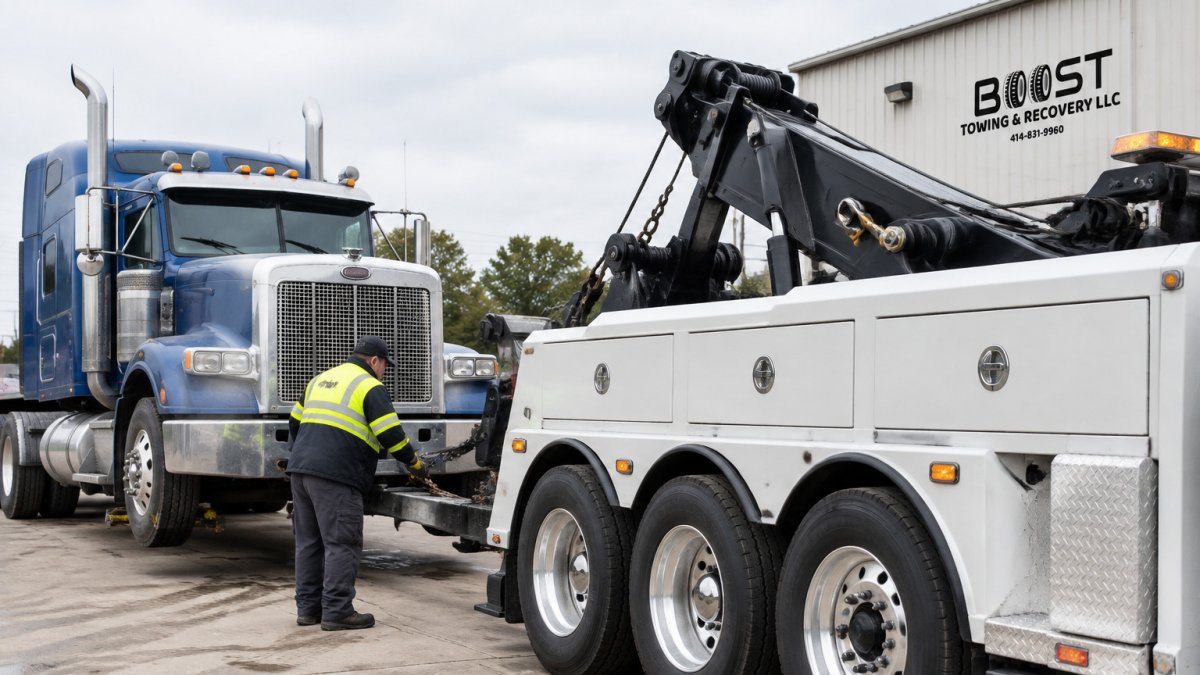
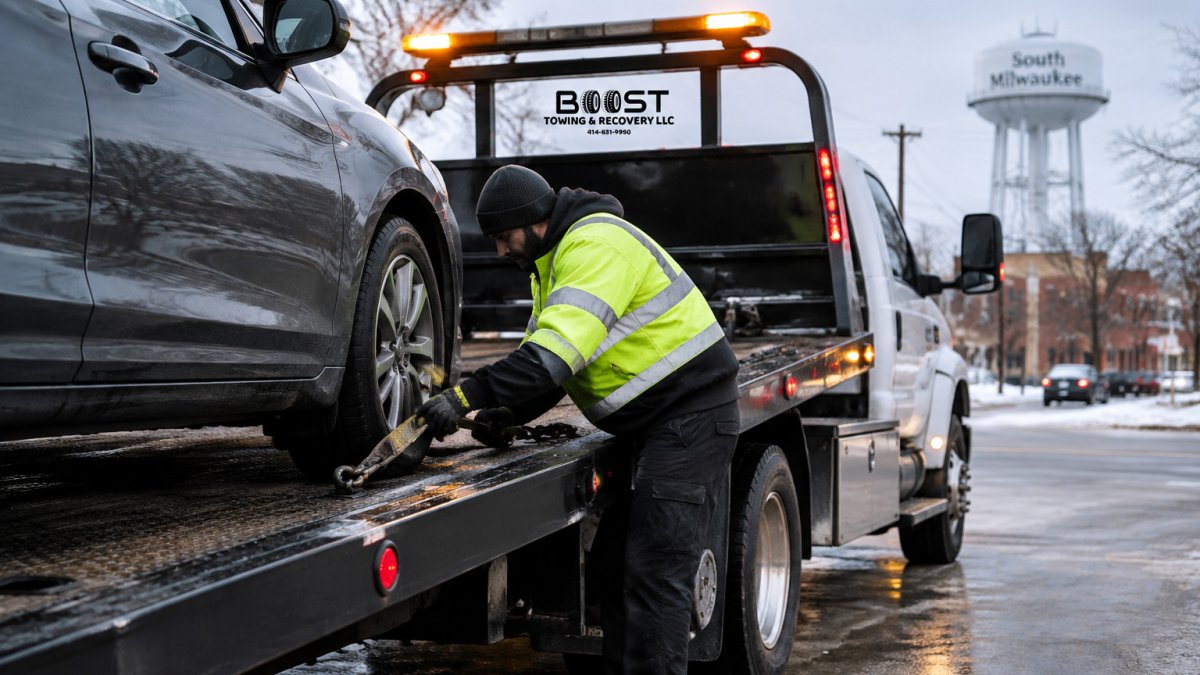
For drivers searching for a tow near me in South Milwaukee, Boost Towing & Recovery LLC runs 24/7 across southeastern Wisconsin. We know the side streets, the blind curves, and the spots where cell service fades. Our flatbed and wheel lift trucks handle everything from daily drivers to specialty cars that need careful loading.
Pro Tip On cold nights near the lake, keep your engine off and run the heater in short bursts if you have fuel. Idling for long stretches in deep snow can block your tailpipe and let carbon monoxide build up inside the cabin (the CDC).
Common Mistakes to Avoid When Stranded at Night
Most breakdown mistakes share one root cause: panic. People move fast, skip steps, and put themselves in traffic. Here's what to skip instead.
Standing behind or beside your car in a live lane
Walking along the road to find help at night
Accepting a tow from an unmarked vehicle with no ID
Leaving the engine running in an enclosed space
Refusing to ask about the total price upfront
Wearing dark clothing while outside the car
Watch Out Never stand between your car and oncoming traffic while waiting. If a passing driver drifts, you have nowhere to go. Wait inside with your seatbelt on, or stand well behind the guardrail.
Conclusion: Stay Calm, Stay Safe, Get Help
A nighttime breakdown is stressful, but it's manageable when you have a plan. Get off the road, turn on your hazards, stay in your car, and call for help with your details ready. Keep a stocked kit and skip the common mistakes.
When you need a hand, Boost Towing & Recovery LLC is here around the clock. We offer 24/7 towing and recovery, flatbed and wheel lift transport, and roadside help like lockouts, jumpstarts, and flat tire repair. We're a family-oriented company, and we treat every call like it's our own family on the shoulder. Get a quote upfront, then book online with Boost Towing & Recovery LLC and get back on the road safely.
Frequently Asked Questions
What should I do first if my car breaks down at night?
First, pull as far off the road as possible and turn on your hazard lights. If you can safely exit, set up reflective triangles or flares behind your car. Stay inside with your seatbelt on and doors locked unless you feel unsafe. Call for roadside assistance and provide your exact location, vehicle description, and the nature of the problem. If you are on a busy highway, call 911 and wait for police or a tow truck.
Should I stay in my car if I am stranded on the side of the road?
Yes, in most cases. Your car offers protection from traffic and weather. Keep your seatbelt fastened, lock the doors, and lower the window only slightly if you need to speak to someone. If you are in an unsafe area or your car is at risk of being hit, exit carefully and stand away from traffic, behind a guardrail if possible. Never stand in the roadway or between your car and oncoming traffic.
What information should I give a roadside assistance provider?
Provide your exact location using highway markers, exit numbers, or a dropped pin on your phone. Describe your vehicle (make, model, color, license plate) and the problem (flat tire, dead battery, lockout, etc.). Mention if you have passengers, pets, or anyone with medical needs. Ask for an estimated arrival time and a total cost quote before they dispatch. Save the dispatcher's number in case you need to follow up.
What should I keep in a nighttime roadside emergency kit?
Pack a flashlight with extra batteries, reflective triangles or road flares, a first-aid kit, jumper cables, a tire pressure gauge, a portable phone charger, warm blankets, bottled water, non-perishable snacks, and a basic tool kit. In winter, add an ice scraper, small shovel, and cat litter for traction. Keep the kit in your trunk and check it every six months to replace expired items.
Book Online

Comments